Labor & Employment
Senator Mike Lee Introduces the Direct Seller and Real Estate Agent Harmonization Act
On September 30, Utah Senator Mike Lee introduced the Direct Seller and Real Estate Agent Harmonization Act, with Utah Senator John Curtis as co-sponsor. It is welcome news for two industries that operate through millions of independent contractors in the U.S. and that have long managed around inconsistent rules, not only across the states but within different agencies at the federal level. The Worker Classification Challenge Worker classification remains one of those corners of the law that is needlessly pesky for most businesses and existential for the handful that rely on armies of gig economy workers. One would think that regulatory clarity and consistency on this question would bring significant efficiency to regulators and businesses both, but historically that has not happened. Instead, in response to a growing gig economy, states have been considering, and in some cases passing, more restrictive tests, and in California the Private Attorneys General Act (PAGA) has generated a steady stream of multi-plaintiff classification claims against companies. State level treatment of direct sellers and real estate agents At the state level, each state adopts its own worker classification tests for wage and hour, unemployment insurance and workers’ compensation purposes. Some states specifically carve out direct sellers as an established category of independent contractors. Some carve out real estate agents in the same way. Many do neither. Federal treatment of the two industries At the federal level, where Senator Lee’s bill would apply, the challenge has also been inconsistency across agencies. The two agencies with the primary interest in the question are the IRS (enforcing federal employment tax rules) and the Department of Labor (enforcing the Fair Labor Standards Act). Each uses a different worker classification test altogether. On the IRS side, clarity came for these two industries many years ago. In 1982, Congress added Section 3508 to the Internal Revenue Code to provide that direct sellers and licensed real estate agents are “statutory nonemployees” for federal tax purposes if they are paid on sales rather than hours and have a written agreement providing that they will not be treated as employees. The DOL, however, has treated these large populations of independent contractors in a less clear, and less consistent, way, with its rulemaking shifting back and forth on how worker status is determined. In 2024, the DOL replaced its prior rule with a six-factor totality of the circumstances rule. Under a new administration, DOL then told its investigators in May 2025 to stop applying the 2024 rule, and in February 2026 proposed to rescind it and return to a version of the 2021 framework. A final rule could issue later this year. What the bill would do The bill amends the Fair Labor Standards Act to harmonize it with the tax code provisions described above. If enacted, a direct seller or qualified real estate agent who meets the Section 3508(b) requirements would not be an “employee” for FLSA purposes. It is a narrow fix. The bill does not amend the NLRA, does not preempt state law, and does not address gig workers generally. (Note that Senator Lee’s broader 21st Century Worker Act, introduced in March of this year, would address the larger classification question.) The House version of this bill, H.R. 3495, introduced by Rep. Kevin Kiley (I-Calif.) in May 2025, cleared the House Committee on Education and Workforce in September 2025 on a 19 to 16 vote. It currently is on the House calendar awaiting floor action. Expect these two industries to monitor developments closely with hope of finding some uniformity at least at the federal level. Follow us for more law and policy updates.
October 5, 2026
by Troy M. Keller, Chris Martinez, and Matthew M. Durham
Housing Policy
The 21st Century ROAD to Housing Act
A Policy Meme Codified Earlier this year, we commented on “housing affordability” as a new and powerful policy meme. Policy memes emerge when the complex work of defining an issue and assessing its importance happens organically as ideas evolve and coalesce, often into catchphrases that carry far more meaning in the current environment than they would if dropped nakedly into some other moment in history. Commentators and policymakers have invoked the meme of housing affordability with growing frequency in recent years, and a flurry of legislative proposals and even a White House executive order have proposed solutions. The meme’s work culminated at the federal level when the 21st Century ROAD to Housing Act became law on July 11. Its comprehensive popularity was evidenced by the fact that it passed the Senate 85-5 and the House 358-32. It was not signed into law, as the White House hoped to leverage its popularity to get other legislation approved, but neither did the President veto it, so it ultimately became law without his signature. A Focus on Housing Supply The ROAD Act is twelve titles drawing on provisions from more than sixty previously introduced bills. It is, in essence, a collection of good ideas that weren’t going to pass on their own but that, bundled together, attracted enough support to become law. In many ways, it was a rare and special achievement by Congress. The initiatives are each helpful, though whether their collective impact will be material or not is uncertain. They range from regulatory streamlining for housing projects and factory-built homes, to incentive funds for communities, to restrictions on institutional purchases of single-family homes, to regulatory relief for community banks. Generally, these provisions target housing supply. Notably, the ROAD Act does little on the demand side of the ledger. It promotes a pilot program for FHA-backed loans under $100,000, and it commissions studies about the scarcity of small-dollar mortgages. But these are modest and in some ways a nod to the fact that the exceptional policymaking of decades past has produced in America the world’s most robust home-loan market. More importantly, it is recognition that demand is not the problem. There are plenty of willing buyers of starter homes, even with interest rates where they are. It is the need for more actual homes that is the problem. Imperfect Tools for Building the Infrastructure The ROAD Act is promising in that it gives new tools to home builders and the banks that finance them. However, it does little to address what in many instances is the gating issue: infrastructure. Traditionally, developers rely on local government to make water, sewer and power accessible. But these are heavy financial lifts that could involve bonding where residents are asked to share in the gamble that the development will be successful. That is a tough sell at least for current residents. One variation that is intended to both empower developers and keep the debt burden with the property owners who ultimately benefit is the public infrastructure district, or PID. PIDs and their cousins have been instrumental in home building for decades in many states, but periodic failures have resulted in criticism. In Utah, a state with a significant need for home building, PIDs came along a few years ago and have proliferated. At the same time, they have been controversial. The Utah State Auditor has questioned their appropriateness and how they are reported. In August, she announced she would be hosting the SEC in a visit to the state “regarding their concerns” with PIDs. In short, there continues to be a lot happening on the housing policy front. Thanks to the meme’s work, most everyone agrees that housing affordability is crucial, but whether we have the right tools in place is an open question. As usual, given the stakes, it is worth watching how it all plays out. Follow us for more law and policy updates.
August 30, 2026
by Troy M. Keller

Corporate Securities
Corporate Governance Perspectives from an Industry Under the Microscope
Recap from our July 16 webinar: “Direct Selling and Good Corporate Governance in 2026” Most corporate governance presentations follow a familiar script: recite some best practices, note how they offer legal protection for companies and boards, and adjourn. In our recent webinar on good corporate governance, we set out to do something more bespoke. We spotlighted an industry that has seen its share of regulatory attention and plaintiff suits over the years and looked to connect the dots between good governance practices and the specific challenges faced by this industry. I was joined by two very qualified people. Chris Martinez, a litigator in our Salt Lake City office, regularly defends companies in the industry and is familiar with the variety of claims they see. Dave Grimaldi, CEO of the Direct Selling Association in Washington, D.C., is the face of the of the direct selling channel before Congress, the White House, the FTC and other relevant governmental bodies, including at the state levels. While our focus was direct selling, we frequently found ourselves noting how these lessons apply across consumer-facing sectors. Why governance matters before anything goes wrong In the webinar, we noted how a feature of consumer products startups is that many of them are able to grow organically, often without outside, institutional money. That feature is relevant to this discussion, as institutional investors typically require some basic governance and compliance structures, and they also provide a degree of oversight. Without that it can be tempting, particularly in early days when a company is moving fast, to push off worrying about formalities. I made the case that good corporate governance is strategic even when no-one is watching. For example, a situation we see regularly is when a fast-growing company gets to an inflection point where they seek investment or a sale, but their weak governance and thin compliance programs lead to a negative impact on their valuation. During due diligence, buyers are accumulating all the issues and assessing value impacts. In particular, a buyer will look at potential third party (including governmental) claims. A quick corporate clean-up can help going forward, but often, that contingent liability historically just sits there. Investors and buyers regularly will discount a company’s value or put money in a long-term escrow that otherwise would go to the seller right away. In short, not having your house in order will cost you at strategic moments, even if the underlying risks never come to pass. Chris made a similar point from the litigation perspective: It’s really the process that matters as much as the outcome. Having good processes where risks are brought to the board, where they’re discussed, and the reasons why a decision is made is put into the minutes will better prepare a company to utilize the business judgment rule. Even if the decision ends up being wrong, that process itself can often be enough to shield the company or the decision makers from liability. The industry-wide stakes Dave brought another perspective that often does not make it into these types of discussions. He pointed out how governance at the company level doesn’t just protect that company: it helps protect entire industries. In this light, showing a great track record across the industry strengthens Dave’s hand when advocating with regulators to defer to the industry’s self regulatory operation it has invested in (namely, the Direct Selling Self-Regulatory Council). Tighter governance across the sector also reduces the perceived incentives for plaintiffs attorneys, attracting fewer claims overall. He argues that good governance is an asset at all levels and is also strategic right now: Extolling and demonstrating good governance is a very powerful defense mechanism. But it can sometimes be an offensive mechanism. . . . We are in arguably the most light regulatory four-year stretch that America has ever seen. It’s not going to stay this way, and so a lot of what we’re doing right now is smartly preventive. The DSA’s work now is about laying the groundwork to make sure that they don’t have ammunition to come at us and say, you have been asleep at the wheel. Cautionary tales and an industry success story We looked at some cautionary tales, both outside of the industry (Dave had some amazing insights into the FTX collapse) and within it, with Chris walking through how platform compliance failures have been spotlighted by recent FTC complaints brought against distributors. One of the Commission’s concerns is companies who have “compliance programs in name only.” On the success side, Chris pointed to FTC v. Neora as “a bit of a roadmap.” When the FTC brought pyramid scheme and false income claim allegations, Neora prevailed because it had the goods: robust record keeping, sign-up data showing why distributors actually joined (overwhelmingly, to buy products they liked at a discount), and a compliance program that was enforced, including against top-of-field distributors. As Chris summarized: “It was more than lip service, and it went all the way from the top down… It ended up giving them the data and the information they needed to win.” What boards should actually do We closed with practical guidance on a few basic, best practices: Add outside directors early. Even private and family-run companies benefit enormously from at least one or two outside directors, i.e., people not on the management team and not closely tied to it. Management is incentivized to grow and take risks; that’s appropriate. But an outside perspective can say, “I’m not personally invested in this, but I have fiduciary duties, and some of these risks just don’t make sense.” Outside directors also provide a more independent, defensible process for boards to review conflicted transactions like CEO compensation. Committee structure. Committees provide another layer of protection. Start with at least an audit committee that owns compliance oversight. Under the Caremark line of cases, complete board absenteeism on mission-critical risks is treated as a duty of loyalty problem with its attending liability for directors. Worker classification vigilance. With PAGA litigation spreading beyond California, the structure of distributor agreements should become a board topic. Chris noted arbitration provisions as an example: “Everybody who’s in this industry who’s worried about PAGA ought to put their arbitration clauses as a topic of discussion.” Class action waivers can backfire when a plaintiff’s firm files 3,000 individual arbitrations, and the company bears the fees. Board hygiene. The written record matters as much as the underlying conduct. Resist the temptation to let AI record and transcribe board meetings, as you are creating a discoverable, uncurated transcript that can be turned against a board doing everything right. One professional set of minutes, prepared by someone who knows what they’re doing, remains the standard. And Chris offered a tip for individual directors: use a dedicated email address for each board you serve on. “It actually makes you think about whether you ought to put something in an email, and it protects your other communications in a discovery process.” My thanks to Chris Martinez and Dave Grimaldi for their generosity and candor. The webinar slides are available on request, and any of us would be glad to discuss these issues in more depth.
July 27, 2026
by Troy M. Keller

Corporate Securities
Appropriations at Midyear: What Businesses Should Watch—and Do Now
Congress has made progress on fiscal year 2027 appropriations, but businesses should still prepare for another period of temporary federal funding. The House Appropriations Committee completed work on all twelve annual funding bills before the end of June, and three have passed the full House. The Senate has moved more slowly; a planned June markup of several appropriations bills was postponed. That gap makes it unlikely that Congress will complete all twelve bills before current funding expires on September 30. Recognizing that reality, the House passed a continuing resolution on July 21 by a vote of 220–205. The bill would generally maintain current funding through December 4, giving Congress additional time to negotiate after the midterm elections. The Senate may revise the House proposal, but the most likely near-term outcome is some form of continuing resolution, or CR—not completion of the regular appropriations process. Why the Appropriations Process Matters to Businesses A CR prevents a government shutdown, but it does not provide the same certainty as full-year appropriations. Agencies operating under temporary funding may postpone new programs, hiring, contract awards, grant decisions, and other activities until Congress determines their final budgets. The Government Accountability Office has found that CRs can create funding uncertainty, slow hiring, increase administrative burdens, and limit agencies’ management options. The effects extend beyond traditional government contractors. Research institutions and technology companies may face delayed grant awards. Infrastructure developers may encounter uncertainty surrounding federal funding or project schedules. Banks and small businesses may depend on federal lending programs. Companies in regulated industries may need timely agency reviews, approvals, inspections, or guidance. Even when federal funding eventually arrives, the delay can produce compressed deadlines and sudden spending activity later in the fiscal year. Businesses may be asked to submit proposals, hire employees, order equipment, or begin performance on shorter timelines. What Businesses Can Do Now Businesses do not need to predict Congress. They do need to know where a funding delay would create a problem. Map the exposure. Identify the contracts, grants, approvals, loans, and major customers tied to federal funding. Flag anything that depends on new money. Existing programs often continue under a CR. New awards, expansions, and higher funding levels are more likely to slip. Pressure-test the calendar. Ask what happens if an award expected in October moves to December—or later. Focus on hiring, cash flow, procurement, and project start dates. Talk to the agency early. Ask whether a CR could affect an award, option year, modification, grant cycle, or funding increment. Put the impact in concrete terms. When communicating with Congress or an agency, explain the operational consequence: delayed hiring, higher financing costs, missed construction windows, or interrupted research. The goal is not to prepare for every possible outcome. It is to identify the few funding decisions that could materially affect the business and build flexibility around them. What Comes Next The immediate question is whether the Senate accepts the House’s December 4 deadline or negotiates a different stopgap measure. If a CR becomes law, attention will shift to the post-election period. Congress will then have to complete the individual appropriations bills, combine them into larger packages, or approve another extension. Businesses should therefore prepare for two separate uncertainties: whether the government remains funded after September 30 and when agencies will receive their final fiscal year 2027 budgets. A continuing resolution would reduce the immediate risk of a shutdown. It would not resolve the planning challenges created by temporary funding. For businesses, the best response is not to predict every congressional outcome. It is to understand their federal exposure, prepare for multiple timelines, and remain ready to act when funding decisions are finally made.
July 23, 2026
by Samuel Flitton

Corporate Securities
A Main Street Policy Discussion About IPOs
Earlier this month, we hosted a roundtable optimistically titled, "Bringing IPOs Back to Utah." It was largely a local affair, with a mix of executives, trade association representatives, policymakers and investors. A main street crowd, but a savvy one. Dorsey, KPMG, and Zions Bank provided perspectives from the legal, finance and accounting side. We were also quite fortunate to host SEC Commissioner Hester Peirce virtually for the second half of the discussion. For more detail on the event and Commissioner Peirce's comments, see this article from Utah Tech Buzz. The discussion centered on two questions. Below we've noted those questions and some interesting takeaways. Question 1: Are IPOs Valuable for Communities? The first question was the easier one. From the community perspective, it seems obvious that having more public companies headquartered in a state is a good thing. Studies have shown a direct relationship between the presence of public companies and increased entrepreneurship and job growth. Also, going public rather than exiting through M&A increases the odds that a firm’s management team stays local. Keeping headquarters in-state is typically an economic development priority for a state for good reasons. It attracts more talent and increases the likelihood that future capital from those firms is deployed in the state where the decision-makers sit. Question 2: What Can a Local Community do to Increase its Number of Public Companies? The answer unfortunately is not a whole lot by itself—at least not when it comes to addressing some of the broader economic and regulatory trends that have discouraged the public company route in recent years. Smoothing the regulatory path, particularly for small and mid-sized companies, is work that the SEC and potentially Congress need to undertake, and as we’ve commented previously, there are initiatives underway. However, our discussion did cover a few ideas of things communities can do to foster a favorable environment for IPOs, so as to at least make the choice more viable, particularly for the smaller and medium-sized companies. These ideas included things like making changes to the state’s corporate code to provide a more convenient and less expensive forum, particularly for smaller public companies, to adjudicate shareholder litigation. Another thought was tweaking existing economic development incentives to align better with companies on the IPO path. Several companies in our roundtable identified sparse analyst coverage for mid- and small-caps as a major challenge. Without coverage, stock prices are depressed once the attention of an IPO is past. Finding ways to recruit or foster analyst attention would be a game changer, but just how to actually do that is a harder question. Some countries, such as Singapore, have in fact created incentives for institutions to provide coverage for their public companies. It could be worth exploring at the state level. Ironically, perhaps the best thing a community can do is to simply talk about IPOs more. Industry conferences these days will regularly include discussions on M&A exits and access to private capital. But IPO discussions are increasingly rare. It is almost as if the pessimism about being public has become axiomatic, such that few growth-stage companies even consider it an option. Increased dialogue should, if nothing else, shed light on the choice so that companies make informed decisions and policymakers are more aware of what is at stake and what is holding companies back.
June 29, 2026
by Troy M. Keller

Fintech
The White House Executive Order on Integrating Financial Technology Innovation into Regulatory Frameworks -- Also, is Fintech Geopolitical?
On May 19, the White House released a unique executive order outlining the Administration’s plan to promote fintech innovation. Given the complexity of existing financial regulatory frameworks, there is reason to be skeptical that this effort results in major changes in the short term. But in light of the broad directives, the banking and fintech communities should stay close to the process. Alongside the domestic regulatory focus, the executive order is framed as important to America’s leadership in the world. So is fintech strategic geopolitically? Groundbreaking Directives The order directs the six Federal financial regulators (CFPB, SEC, NCUA, CFTC, FDIC, and OCC) to review their regulations, guidance, and no-action letters within 90 days and to take steps to encourage fintech innovation within 180 days. This is a lot to undertake over a short period of time, and much could come of it. While we wait to see those results, a more specific and ground-breaking request is to the Board of Governors of the Federal Reserve System (FRB) to undertake a comprehensive evaluation to explore expanded access to "Reserve Bank payment accounts and payment services by uninsured depository institutions and non-bank financial companies, including those engaged in digital assets and other novel financial activities (collectively, covered firms) . . ." If this request has the intended results, we could see a major expansion of financial services in the U.S. as fintechs and other types of "covered firms" rush in to have direct access to the Fed's payment rails. That might propel innovation and additional players, as fintechs are motivated to capture margin currently shared with sponsor banks, leading to more and more entrants. Of note: the day after the EO, the Federal Reserve announced a proposal to create a special purpose payment account that would allow eligible financial institutions, including non-traditional depository institutions, to apply for Fed accounts through which to process payments. It does not technically change the scope of who is legally eligible for an account; however, it proposes a stripped-down account type. Uninsured depository institutions (such as some state chartered crypto organizations) have had limited success receiving approval to access payment accounts in the past. This proposes to change that. What Does this Mean for Banks' Regulatory Moat While it is a bold EO, I am skeptical of material regulatory changes coming out of this EO, at least in the short-term. Here is why. For a very long time, banks have been utilized as quasi-regulators in the financial system. Banks are required to run KYC checks, screen sanctions lists, flag suspicious activity and much more. That relationship won't change anytime soon. Asking a 3-person fintech dashboard startup to take these on is impractical, and so the regulatory moat is a deep and wide one. The Fed’s own proposal underscores this point: payment-account holders would be expected to police illicit-finance risks themselves, so direct access shifts the compliance burden onto the fintech rather than removing it. (I read an interesting article from a fintech founder this week making some of these points with respect to the entry of AI into financial services). In short, this executive order is pushing financial regulators to bridge that regulatory moat and open access for fintechs into financial systems that historically have been left to banks. I don't know how much is possible in the near future. However, I expect the agencies will come back with proposals, partial work-arounds, exceptions and sandbox opportunities that could certainly accumulate into meaningful expansions of opportunity for fintechs. Fintech Geopolitics? I may be reading too much into it, but the EO's fact sheet comments repeatedly on the importance of ensuring U.S. leadership in fintech, in digital assets and "other cutting-edge technologies." Is this just generic we-ought-to-lead-the-world-in-everything sentiment or is it part of the concern that our leadership in AI and other frontier technologies could be existential? I suppose it is somewhere in the middle. The position of the dollar as the world's reserve currency has long been a structural advantage, and in many ways it relies on the strength of the U.S.' financial system. Leadership on innovative financial technologies is a growingly significant component.
June 4, 2026
by Troy M. Keller

International Trade
Tariffs Roundup
My colleagues published an excellent eUpdate on a number of trade developments this week. It's been a lot, with USTR coming out with a slate of new 301 Tariffs following its investigation into forced labor related policies and practices, opening a new 301 investigation on intellectual property protection in Vietnam, adjustments to 232 duties and more. Here is a link to the eUpdate. Also, here is a link to an X post from USTR with Jamieson Greer speaking to unfair trade practices in defense of the new tariffs. Coming out of all this, and an opportunity importers from China should seriously consider, is the chance to comment on "non-sensitive" goods that could be subject to tariff modifications. Here is an excerpt from the eUpdate: On June 2, 2026, USTR solicited public comments on a new Board of Trade that is intended to manage the U.S.-China bilateral trade relations, which the Trump Administration previewed after the meeting between Presidents Trump and Xi in May 2026. USTR seeks comments on non-sensitive goods that could be subject to tariff modifications on each side. The comments window closes on July 10, 2026, and any rebuttals or responses could be submitted by July 27, 2026. A link to this announcement can be found here.
June 4, 2026
by Troy M. Keller, Dave Townsend, and T. Augustine Lo

International Trade
Using AI to Analyze 600+ Tariff Comment Letters
Like many, I've found myself experimenting with AI to see if it would enable me to take on projects that are otherwise out of reach. I've had success in some narrow cases, but other times I've ended up in a rabbit hole to nowhere. My most recent project has landed somewhere in the middle. When USTR opened two Section 301 tariff comment dockets in March, I had aspirations of creating an AI-powered process that would allow me to effectively harvest insights and trends from the large amount of commentary that was sure to follow. I imagined how useful it would be to create a database using automated tools and then slice and dice the information to provide new perspectives. Now, after a few weeks of iterating, I've got a tool that provides much of that functionality though with some drawbacks. You can see it for yourself here. Background on 301 Tariff Dockets As we discussed in an earlier blog post, USTR initiated a suite of 301 investigations on March 11, 2026 and then again on March 12 into the trade practices of sixty foreign economies. The investigations were a necessary procedural step for the USTR prior to determining whether new schedules of 301 tariffs can be applied in those jurisdictions. While the prospect of renewed or even potentially increased tariffs was an unwelcome development for many, the ability to comment in the investigations was an opportunity many organizations seized. In the end, hundreds of comment letters were filed by the deadline of mid-April. After hearings in early May, USTR extended the comment period to allow for post-hearing submissions; that window closes later this week. My Process For this exercise, I downloaded 633 comment letter pdfs that had been filed at the time the dockets originally closed in mid-April. I have not included letters filed since they re-opened, nor have I included data from the transcripts of hearings earlier this month. Those may come in a phase 2. To keep the dataset manageable and to focus on the more substantive comments, I also did not include comments that were not accompanied with a filed letter. This information was then aggregated in a datasheet and displayed on the dynamic dashboard linked to above. The dashboard includes summary information that can be filtered by industry, type of commentator, type of relief requested, targeted country and other factors. Each comment summary links to a stored copy of the commentator's pdf letter. AI Tools I Used The first step was to download 633 letters into a folder. I relied on an openclaw bot to manually download them one at a time (as they weren't available for bulk download on the Federal Register). As usual, getting the bot permissioned was most of the battle. A couple of times, I thought the process was moving along only to discover later that it had basically hallucinated most of the letters (which was impressive in itself, as these were real-looking pdfs from known companies--they just hadn't actually filed letters). I also relied on the openclaw bot to make updates to a database in Google Sheets where I stored extracted information from the letters. The bot's ability to write to the database so that I didn't have to continually cut and paste corrections from various chats was where it shone. While the bot was useful for moving files around and editing the database, I used Gemini and Claude for the thinking and analysis. They were more accurate and less likely to generalize or hallucinate. Still, because of the number of letters, these tools had to be prompted in small batches to read and pull summary data from them. More than 20 letters at a time would result in them hitting limits and either stopping mid-analysis or returning extrapolations that were useless. Running the prompts over and over was one thing, but re-explaining the whole project every time they lost context due to compaction was painful. I also used Claude to develop the dynamic dashboard to display the results and allow users to filter and sort them. The dashboard was published using Google Sites. Limitations and Caveats Every step involved accuracy challenges and more effort than I would want to repeat to catch them. At this moment, bugs still remain, mostly in the categorizations. As a result, the data is good enough for spotting trends, but probably not good enough for citation. Other limitations are by design. The categories we ended up with for industry sectors we more or less evolved into while trying to organize the letters into manageable groupings. In hindsight, a better route probably would have been to apply NAICS codes from the outset--though that might have led to dozens of single-entry categories, which I was hoping to avoid. Some Findings The main value from this exercise is the ability to go to the dashboard and filter results in a variety of ways to see what types of groups are commenting and what they are asking for. To give you a flavor, here are a few observations for each filter. Comment Letter Asks. No surprise, a significant number of the letters (261) sought tariff exclusions as their primary request to enable them as importers to better compete. However, there were more letters than I would have guessed going the other direction—114 in total. Generally, these were organizations pushing for tariffs that would be beneficial to their U.S. operations. A number of commentators used the opportunity to highlight non-tariff trade barriers or other trade affecting dynamics. We categorized most of these asks as "nuanced" given they covered concerns that did not fit cleanly into the for-or-against tariff framing. Who Filed. Individual corporations filed the bulk (305) of the submissions, followed by trade associations (200). NGOs and think tanks accounted for 60. Submissions also came from foreign governmental entities (11) and labor unions (7), with 50 falling into an "other" bucket. Targeted Countries. In terms of countries that were the subject of the comment letters, China came up the most (in 235 letters). Outside of China, the EU and India were the only economies to feature in over 100 letters. Mexico (80), Vietnam (73), Japan (48) and Taiwan (45) round out the rest of most-mentioned jurisdictions. Most Represented Industries. As expected, heavy manufacturing interests (industrial equipment, automotive, chemicals) represent the bulk of the comment letters. However, other sectors were also quite active. Our transportation/logistics category included 35 letters, and semiconductors and electronics category involved 24 letters. We counted 23 medical and pharmaceuticals related letters and 21 for textiles & apparel. Interestingly, 13 letters landed in our arts & antiques category, 15 in dairy & cheese and 12 in bicycles, motorcycles & e-bikes. These are high numbers for niche areas and demonstrate more sophisticated supply chain dynamics than might be expected. Parting Thoughts Overall, I'm pleased with the results and the capability of the dynamic dashboard. The lack of full confidence in the accuracy is not a small drawback. However, it's not so large a database that flaws are hidden, which means there is still good utility for those who are a little forgiving when they notice some mis-categorizations.
May 19, 2026
by Troy M. Keller
Making IPOs Great Again
Securities & Exchange Commission (SEC) Chair Paul Atkins has been vocal about his desire to make IPOs great again. It would take a serious amount of rulemaking and potentially even statutory changes to reshuffle the mix of incentives and burdens that have inclined companies against going public in recent years. But if he is successful, even in part, there could be meaningful benefits. First, Some History The depressing statistics on public company trends are well publicized at this point--but here they are again. In the mid-1990s, we had roughly 8,000 public companies in the United States. We have about half that many today, as the number of public companies going private, consolidating, or failing has outpaced new listings. And even though 2026 is expected to be a landmark year with a handful of massive, AI-related IPOs in queue, it remains unlikely the number of listed companies will see a net increase. How IPOs Became the Road Less Traveled There is room for debate as to the cause of the decline in IPOs. It coincided with the rise of private equity, but whether more companies choose to stay private because of the comparatively higher compliance burden and associated legal exposure of being publicly traded or because private capital is a better model (more nimble and more, well, private) is hard to say. Chair Atkins at least is firmly in the camp of those who see regulatory burden as the culprit, noting most recently how "decades of accretive rulemakings and regulatory adventurism have made the path to becoming a public company narrower—and the experience of remaining one encumbered with rules that can introduce more friction than benefit." He may not be wrong. I started practicing law in the late 1990s. The $40-100 million IPO was a common occurrence in those days. But after the one-two regulatory punch of Sarbanes-Oxley in 2002 and Dodd-Frank in 2010, small and mid-sized IPOs have largely fallen out of favor. Companies wait longer before going public, if they do at all, implying the need for a certain scale to justify taking on public company costs. Impact on Investors The lack of smaller, SME-sized IPOs almost certainly has negative consequences. As Atkins said in an address in December 2025: Raising capital through an IPO should not be a privilege reserved for those few “unicorns.” More and more, public investments are concentrated in a handful of companies that are generally in the same one or two industries. Our regulatory framework should provide companies in all stages of their growth and from all industries with the opportunity for an IPO. Most commentary has focused on this timing point, how the average investor is excluded from participating in the early growth that happens before a company goes public. This disparity in opportunity (as between the main street investor and high net worth and institutional investors) is a concern both political parties have flagged over the years. For example, in no small part, the Obama era JOBS Act of 2012 was motivated by this issue alongside its headline goal of bringing more capital to small businesses. Its creation of the emerging growth company category in public offerings was significant, though it has not been enough to reverse IPO trends. Further policy changes that encourage companies to choose the IPO route, and to choose it earlier in their life cycle, would do much to close the opportunity gap. Impact on Innovation Chair Atkins' point about IPOs being limited to "one or two industries" in my view merits as much attention as the timing issue. Innovation in traditional sectors like manufacturing, health care, chemicals, food & ag, consumer products, etc., could benefit greatly from another accessible path to capital for developing companies. As things stand, non-Silicon Valley-type SMEs have limited access to equity capital unless they choose to be consolidated into a conglomerate or rolled up into a PE backed initiative. But those are exit events rather than capital raising opportunities. Having a realistic option to go public would offer another path that could lengthen the window for innovators in these sectors to experiment with new products and business models. Impact on Communities The benefits of more small and mid-cap IPOs could also accrue to local communities, particularly non-financial or tech center geographies that rely heavily on SME enterprises. When companies exit through M&A rather than an IPO, more often than not the community loses a number of "headquarters" jobs. Not only does that lead to brain drain in the affected community, it could also lead to decreased investment. For instance, when decision-makers sit locally, they would seem more inclined (all else being equal) to direct future capital investment into the same locality. Ultimately, bringing IPOs back to the peak of the 1990s is probably not realistic. Even if the regulatory burden were massively reduced, the private capital markets have become large and powerful, and that dynamic isn't going away. But even incremental shifts could provide important benefits. Follow us for more law and policy updates.
April 18, 2026
by Troy M. Keller

The Forest Service Is Coming to Utah: What It Means for the State, Its Businesses, and Public Lands Management
On March 31, USDA announced that the U.S. Forest Service will relocate its headquarters from Washington, D.C. to Salt Lake City, bringing roughly 260 positions and the agency's top leadership to the Intermountain West. For Utah, a state with more than 8 million acres of national forest land and a roughly $9.7 billion outdoor recreation economy, this is a significant development. Utah Is Already at the Table The relocation does not arrive in a vacuum. In January 2026, Utah finalized a 20-year cooperative agreement with the Forest Service giving the state a substantially larger role in managing its national forests, covering decisions about logging, grazing, recreation, wildlife, and forest restoration. The Forest Service's Intermountain Regional Office has been based in Ogden for decades. That office will close under the reorganization, but the new national headquarters in Salt Lake City places an even higher level of decision-making authority in the state. What the Reorganization Looks Like The restructuring goes beyond a change of address. All nine regional offices will close, replaced by 15 state directors and six new "operational service centers" around the country. The full transition is expected to take about a year, with employee relocations beginning this summer. Implications for Utah Businesses Utah was the first state to create a dedicated Office of Outdoor Recreation, and companies like Cotopaxi, Backcountry, Vista Outdoor, Amer Sports, Osprey Packs, and Rossignol are headquartered or have major operations here. Outdoor recreation is a major contributing sector to the state's economy and supports around 75,000 jobs. For businesses that depend on access to national forest land for recreation, grazing, timber, or resource extraction, having Forest Service leadership in Salt Lake City could mean faster engagement with the agency's top decision-makers and new contracting opportunities as the agency builds out its Utah presence. At the same time, existing Forest Service contractors should prepare for potential disruptions as contracting officers relocate and the organizational structure is redrawn. The Public Lands Backdrop The announcement lands in the middle of an active debate about federal land ownership in Utah. The federal government owns roughly two-thirds of all land in the state, and Senator Mike Lee has repeatedly pushed for the sale of federal public lands, most recently through an amendment to the budget reconciliation bill last summer that was ultimately withdrawn after bipartisan backlash. Some observers have raised concerns about locating the agency's headquarters in a state whose elected officials have challenged the constitutionality of federal land ownership. Others argue the move simply puts leadership closer to the land it manages. Rep. Celeste Maloy of Utah's 2nd Congressional District, who sits on the House Natural Resources Committee, welcomed the relocation, saying it could improve responsiveness on wildfire and land management. What to Watch Several open questions remain: whether the Forest Service will experience the same kind of workforce attrition that followed USDA's Kansas City relocation during the first Trump term; whether Congress will raise legal objections to the move; how the shift to a state-based management model will affect tribal relations; and whether Utah's expanded cooperative agreement becomes a template for other states or a flashpoint over state influence on federal land decisions. For businesses, governments, and organizations with a stake in how Utah's public lands are managed, this reorganization is worth watching closely.
April 3, 2026
by Samuel Flitton

Executive Orders
New Executive Order Puts Federal Contractors on the Clock for DEI Certifications
On March 26, the Trump administration issued an Executive Order titled “Addressing DEI Discrimination by Federal Contractors” that represents perhaps the most significant operationalization to date of the administration’s campaign against DEI. The order requires federal agencies to incorporate new anti-DEI certification clauses into contracts, contract-like instruments, and subcontracts within 30 days, meaning the April 26 deadline is fast approaching. What’s New The EO introduces a mandatory contract clause requiring federal contractors and subcontractors to certify they will not engage in “racially discriminatory DEI activities,” which the order defines as disparate treatment based on race or ethnicity in recruitment, employment, contracting, program participation, or the allocation of an entity’s resources. That definition is notable: it’s the clearest articulation the administration has offered to date of what it considers impermissible DEI. The order also grants the government broad audit authority, requiring contractors to make their books, records, and accounts available for compliance reviews, with few express limitations on scope. Prime contractors must monitor and report subcontractor noncompliance. And noncompliant parties face serious consequences: contract termination, suspension or debarment, and False Claims Act liability, including treble damages and qui tam exposure. Why It Matters The scope of who qualifies as a “federal contractor” or “subcontractor” under this EO remains unclear, but could sweep in tens of thousands of entities, including universities, healthcare providers, small businesses, and even vendors and suppliers to prime contractors. The order also creates potential tension with existing federal programs like the SBA’s 8(a) program and state-level requirements for affirmative action plans or disadvantaged business enterprise participation. What to Do Now Federal contractors should be taking steps now to prepare. Our colleagues Chris DeLong, Matt Gillespie, Alex Hontos, and Eric Weisenburger break down the order’s key provisions, open questions, and practical compliance guidance in their full client alert: New DEI-Focused Executive Order Implements Expansive Audit Authority and Imposes DEI Certification Obligations on All Federal Contractors, Subcontractors. For questions about how the EO may affect your organization, please contact any member of Dorsey’s Government Contracts or Labor & Employment teams.
April 2, 2026
by Samuel Flitton

Artificial Intelligence
The Season of the Sandbox
The concept of a regulatory sandbox is becoming a familiar one. When a recent White House executive order laid out a comprehensive legislative framework for artificial intelligence, it included a call for Congress to establish federal regulatory sandboxes, without any further explanation. Just a few years ago, such a request might have been met with a confused stare. Now, the idea of a regulatory sandbox is a recognized policy making tool. I serve on the advisory committee for Utah's General Regulatory Sandbox and am excited about the potential for sandboxes, both at the state and federal levels. Given recent developments and momentum, I decided to put together a quick post on the innovative policymaking approach, to be followed hopefully soon with a more fulsome guide for businesses. What is a Regulatory Sandbox? While you've heard the term and likely have a general sense for what is involved, here is a quick explanation. The term itself (sandbox) is borrowed from the world of software engineering, where new code is sometimes tested in an isolated environment for safety reasons before being released. Extending that concept to the policy world, a regulatory sandbox generally refers to a program run by a regulatory body where new products and solutions are allowed to be tested in the marketplace under temporary waivers or "no action letter" interpretations of regulatory restrictions. This is typically done over a limited period of time (1-2 years is typical) and in a controlled fashion, including regular check-ins with the regulator. If the test yields positive results, long-term regulatory changes might then be proposed and rolled out. How Long have Regulatory Sandboxes been a Thing? The sandbox approach originated in the heavily regulated fintech space. The first one was an initiative in the U.K. in 2015 to support fintech startups. The approach has steadily gained traction since then, with sandboxes proliferating across the U.S., Europe and Asia. Arizona gets credit for adopting the first one in the U.S., a fintech sandbox launched in 2018, followed shortly by Utah. Utah took the concept a step further in 2021 by offering a comprehensive regulatory sandbox that is not limited to financial technologies. The state also offers legal and AI sandbox programs. At the federal level, the history is more start and stop. The Consumer Financial Protection Bureau launched a fintech sandbox in 2019, which had a short life when it was shuttered under the Biden Administration. A few months ago, the SEC and CFTC launched Project Crypto, which includes as a feature a sandbox-styled initiative where companies can trial tokenized products, particularly those with DeFi applications. As mentioned, there is momentum in DC around the concept of an integrated AI sandbox across agencies. Last year, Senator Cruz proposed a bill (S.2750 - SANDBOX Act) providing for just this approach. What Sandbox Opportunities Exist Right Now? While the AI sandbox vision contemplated by Senator Cruz’s bill and the White House executive order remain policy proposals for now, regulatory sandbox opportunities already exist in various forms across the United States, both at the federal and state levels. States with sandboxes of one kind or another include Arizona, Utah, Texas, Florida, Nevada, Kansas, North Carolina, Ohio, Kentucky, Vermont, South Dakota and West Virginia. Most of these sandboxes target highly regulated sectors, such as fintech, AI or even insurtech. However, some, such as Utah's, are technology-and-sector-agnostic and are potentially open to any business. This list changes regularly. What does it Take to Participate in a Sandbox? Requirements vary, but the spirit of the sandbox concept is to promote both innovation and regulatory reform where it makes sense to do so. As such, typically a proposal needs to bring a new solution to the market. Simply saying you want to do the same thing you've always done but with less regulatory restriction generally is not a winning proposal. That said, such an approach is not necessarily out of the question if a good case can be made that a public benefit could be achieved (such as addressing housing affordability). Is participating in a Sandbox a Good Idea for My Company? Maybe! It is certainly wise to look at a sandbox approach if you have a new business product or service that would be restricted by existing rules. Otherwise, to roll out your innovation you would need to challenge the law in some fashion or await formal policy change. However, given that sandbox options at the federal level are limited and state regulatory sandboxes only provide relief from state rules, the current sandbox opportunities are likely to be helpful only if the restrictions you are focused on are state level ones. For example, state sandboxes are particularly useful for navigating licensing requirements and consumer protection statutes--but they won't help when it comes to federal permitting requirements. Another limitation of a state sandbox is that you would need to operate within the geographic limitations of the state(s) where you are granted the regulatory relief. Despite these limitations, a sandbox approach can be powerful in pioneering new products and showcasing their efficacy in the real world, providing compelling evidence both of the utility of the innovation and the appropriateness of a specific policy change. Looking Ahead Sandboxes have the potential to address significant policymaking challenges. As use of frontier technologies like artificial intelligence proliferates, we will need new regulatory frameworks that are fit for purpose to both empower customers and promote competition. Also, affordability and global competitiveness concerns have raised questions around the benefit of some legacy regulatory systems. Process-based approaches like sandboxes are appealing in both cases because they provide flexibility to move with the pace of technology, and they allow efficient ways to test existing rules. However, until we have more sandbox options at the federal level, their utility will be limited. Follow us for more law and policy updates.
March 30, 2026
by Troy M. Keller

Utah
Utah Legislature - 2026 General Session Wrap Up
At midnight on March 6 the Utah Legislature adjourned sine die after passing 542 total bills – approximately 53% of the 1,015 bills introduced this session. A full list of bills that passed the Legislature and were sent to the Governor may be found here. The Governor has 20 days following adjournment to take action on the bills that passed. While the Governor has vetoed a number of proposals in past years, in a recent interview Governor Cox dubbed the 2026 Session as the “best session” he’s been involved in as Governor. This is high praise in itself, and when paired with positive feedback from across the political aisle, including Salt Lake City Mayor Erin Mendenhall stating this was “one of the most productive legislative sessions that we’ve had,” it reflects the largely positive responses to the legislature’s efforts over the 45-day session and the enacted policies that will continue to shape the entirety of Utah’s landscape. As is often the case, what did not pass this session was equally important as what did pass. This session, the legislature appears to have struck the right balance between enacting policies with industry support, working with business and industry associations to reach workable compromises on key issues, and pausing proposals that require additional time for negotiation. Below we have provided an overview of the final outcomes for the bills of interest highlighted in our weekly updates and provided additional resources for issue and industry specific legislative recaps. A final thanks to members of the business community for dedicating time and resources to engage in the legislative process. Sharing your technical expertise helps legislative proposals find their mark, limits unintended consequences, and ultimately shapes stronger policy outcomes. Outcomes on Priority Bills from Legislative Watchlist In our weekly updates throughout the session, we have included a number of “bills we are watching,” and referenced proposals of particular significance. Below we have compiled a table overviewing the final outcomes for each of these proposals. Policy Area Bill Number & Title Sponsor Final Version Description Outcome Business HB 175: Public Funds and Political Activities Amendments Rep. Trevor Lee Original This bill would have prohibited an entity from receiving a government contract or state grant if they: participate in a political campaign, devote more than an insubstantial part of the entity's activities to attempting to influence legislation, or if their primary objective can only be attained by legislative action or inaction. It would prohibit a current or prospective government contractor or grant recipient from making a contribution to a political entity or to another person for a political purpose. Did Not Pass Business SB 179: Wage Amendments Sen. Nate Blouin Original If enacted, this bill would require that an employer include information relating to wages and other compensation in a job listing; increases the minimum wage in the state to $20 per hour; prohibits that the Labor Commission from establishing a minimum wage that is lower than $20 per hour; requires that the commission adjust the minimum wage for inflation at least once per year. Did Not Pass Business / AI Pricing Regulation SB 293: Consumer Pricing Data Amendments Sen. Heidi Balderree 1st Sub. This bill would have restricted suppliers from using a consumer's personal data (biometrics/purchase history) to set prices for goods or services; established a three year retention of data used by the automatic pricing system; provided enforcement mechanisms for the Division of Consumer Protection; among other provisions. The 1st Sub. was not adopted and the bill failed to pass out of the Senate. Did Not Pass Business / AI Pricing Regulation SB 177: Product Pricing Amendments Sen. Stephanie Pitcher 1st Sub. This bill would have required suppliers to display disclaimers when using algorithmic pricing to set the price of goods or services (with exceptions) and provided the Division of Consumer Protection enforcement power. Did Not Pass Business / Consumer Protection HB 29: Unfair and Deceptive Pricing Amendments Rep. Tyler Clancy Original This bill would have prohibited hidden fees by requiring the clear and conspicuous disclosure of the total price in an offer or advertisement of a product; Did Not Pass Business / Labor & Employment HB 203: Noncompete Amendments Rep. Tyler Clancy 1st Sub. This bill was a key focus of the business community this session. If enacted, the bill would prohibit employers from enforcing a non-compete agreement if the employee is: nonexempt, a full-time student engaging in an internship or other short-term employment, eighteen years or younger, their total earnings are less than $155,000 per year, or if the agreement would restrict an employee's ability to work more than 25 miles from a specific geographic location. The 1st Sub. of the bill reflected some of the changes requested by the business community, including removing the garden leave clause but ultimately the bill pulled from the House 3rd Reading Calendar by the Sponsor to allow more time for discussions and negotiations with the business community over the interim Did Not Pass Civil Law / Tort Reform SB 211: Tort Amendments Sen. Kirk A. Cullimore 1st Sub. This was a priority concern for the business community. If enacted, this bill would have: 1. Limited what juries can hear about insurance and paid medical bills. 2. Prevented settlement decisions based on discounted medical costs. 3. Increased potential liability exposure and insurance costs, which could ultimately increase insurance costs for Utah businesses. Did Not Pass Civil Law / Tort Reform SB 280: Damages Amendments Sen. Ronald Winterton Original This bill would have established a statutory framework for the determination of recoverable medical damages in civil actions in alignment with core holdings from the Utah Supreme Court’s ruling in Gardner v. Norman (October 2025) and was viewed by the business community as a reasonable alternative to various tort reform proposals. Did Not Pass Critical Minerals SB 254: Extracted Natural Resources Amendments Sen. Ann Millner 4th Sub. This bill was one of the most significant policies of the 2026 session and establishes the statutory framework to catalyze the state's goal of becoming a major global producer of critical minerals. Facilitates faster permitting by the Department of Environmental Quality and the Division of Oil, Gas, and Mining; establishes the Critical Minerals Council, including establishing the council's operations, powers, and duties; addresses areas of coordination by certain council members, establishes a process to designate critical mineral zones, including providing for property tax differential revenue; provides for the creating of a clearinghouse of data to be known as the "Critical Minerals Atlas"; addresses the creation of the Minerals for Industrial, National, and Economic Security Center; creates the Critical Minerals Development Account; and modifies the tax credit for mining exploration, among other provisions. Passed Gov. Operations SB 298: Programmable Money Amendments Sen. Keven Stratton Enrolled This bill: defines terms; excludes programmable money from the standard definition of money; prohibits a person from requiring the use of programmable money for a transaction unless the person also offers a free, non-digital alternative, among other provisions. Passed Housing HB 68: Housing Amendments Rep. Cal Roberts 6th Sub Consolidates existing state housing programs into one entity under the Governor’s Office of Economic Opportunity and creates the Division of Housing and Community Development within the GOEO. Passed Immigration HB 571: Immigrant Amendments Rep. Trevor Lee Original This bill would have prohibited money transmitters from sending funds for unauthorized aliens. Did Not Pass Labor & Employment HB 294: Employer Verification Amendments Rep. Tiara Auxier Amended This bill would have lowered the employer verification threshold from 150 to 100 employees, requiring private employers who employ 100+ employees to register with a status verification system to verify the federal legal working status of any new employee after July 1, 2027. The bill originally set the threshold at 50 employees and was amended multiple times to increase the proposed threshold to 100, then 125 employees before failing. Did Not Pass Labor & Employment HB 245: Construction Wage Standard Act Rep. Tyler Clancy 1st Sub. This addressed wage standards for construction projects; directed the Labor Commission to determine the wages for the occupations a construction project required for each county; established: a wage minimum that a contractor may pay a qualifying employee; a recordkeeping requirement; and the penalties for noncompliance; and made technical and conforming changes. Did Not Pass Land Ownership HB 291: Security and Land Restriction Amendments Rep. Candice Pierucci Amended This bill would lower the percentage of ownership a restricted foreign entity may maintain in a separate entity before the separate entity is considered a restricted foreign entity from 51% to 25% ownership interest. Passed Taxes HB 161: Property Tax Modifications Rep. Jill Koford Original If the accompanying referendum HJR 7 was passed by voters, this bill would have increased the residential property tax exemption from 45% to 60% and likely shifting a greater portion of the tax burden from residential to commercial properties. Did Not Pass Taxes SB 60: Income Tax Rate Amendments Sen. Dan McCay Original This bill amends the income tax rate provisions and reduces the corporate and individual income tax rates from 4.5% to 4.45% for the 2026 tax year. Passed Taxes HB 441: Property Transaction Amendments Rep. Jill Koford Original This bill would have required the seller or the closing agent make available information about the property, including sales price, to a county Did Not Pass assessor when ownership of property is transferred. Taxes HB587: Income Tax Amendments (R&D Expensing Decoupling) Rep. Steve Eliason Sub. 2 If enacted, this bill would lower Utah's corporate and individual income tax rate from 4.5% to 4.45% and create a Utah add back for domestic research and development expenses if they are fully deducted federally, allowing these expenses to be amortized over 60 months. The 2nd Sub. for this bill removed the R&D decoupling provisions. Did Not Pass Taxes SB 116: Income Tax Rate Modifications Sen. Lincoln Fillmore 1st Sub. This bill would have allowed for a reduction of the income tax when the state revenue exceeded the forecasted revenue. Did Not Pass Taxes SB 287: Targeted Advertising Tax Sen. Mike McKell Enrolled This bill creates a new statewide tax on targeted digital advertising delivered in Utah by large advertising platforms and establishes a dedicated revenue stream to fund specified youth and community programs. Beginning January 1, 2027, an annual tax will be levied on "targeted advertising entities. Passed Taxes/Child Care HB 190: Childcare Business Tax Credit Rep. Jason Thompson 2nd Sub. This bill increases the amount of nonrefundable corporate and individual income tax credits to 30% of the qualified child care expenditures if they qualify as an eligible small business; repeals the requirement for an employer to have claimed the tax credit for construction expenditures in order to claim the tax credit for child care expenditures. Passed Technology / AI HB 286: Artificial Intelligence Transparency Amendments Rep. Doug Fiefia 1st Sub. This bill would have enacted the AI Transparency Act relating to transparency and whistleblower protections for frontier artificial intelligence models and required "large frontier developers" to publish safety plans for chatbots with 1M+ subscribers, publish summaries of risk assessments for certain AI models; file reports with Utah's Office of Artificial Intelligence Policy, among other provisions, and would have established civil penalties for violations. The bill sponsor pulled the bill from consideration due to a formal request from the White House to Legislative Leadership to not move forward with the proposal. Did Not Pass Technology / AI HB 438: Artificial Intelligence Amendments Rep. Doug Fiefia 5th Sub. If enacted, this bill would have enacted the Companion Chatbot Safety Act to regulate operators of companion chatbots and protect consumers. This bill: defines terms; requires operators of companion chatbots to comply with the Utah Consumer Privacy Act; establishes disclosure and data protection requirements for operators; establishes additional safety requirements for operators serving minor users; authorizes rulemaking for age assurance and safe harbor standards; requires annual reporting by operators to the Office of Artificial Intelligence Policy; grants enforcement authority to the Division of Consumer Protection; provides for administrative fines and civil penalties; establishes safe harbor provisions for operators; and provides a severability clause. Did Not Pass Industry and Issue Specific Legislative Recaps For additional reference, we have compiled a list of issue specific legislative recaps and analysis of major policy developments during the 2026 Utah General Legislative Session. These resources were prepared by industry associations, universities, media outlets, advocacy organizations, and government agencies. We are grateful to the authors and organizations listed below for their insights into legislative outcomes across key policy areas including tax policy, natural resources, energy, housing, education, and local government affairs. Business, Taxes, and State Budget Utah Chamber of Commerce. 2026 Legislative Update: Week 7. Utah Chamber of Commerce. https://www.utchamber.com/blog/2026-legislative-session-week-7-update/ Deseret News. “Why Don’t Utah Lawmakers Cut Property Taxes?” Deseret News. https://www.deseret.com/utah/2026/03/05/why-utah-lawmakers-dont-cut-property-taxes/ Utah Governor’s Office of Planning and Budget. Sine-Nara to the 2026 Utah General Session. State of Utah Budget Office. https://budget.utah.gov/sine-nara-to-the-2026-utah-general-session/ This post summarizes the state budget adopted by the legislature, including tax policy changes and major appropriations. The FY 2027 state budget totals approximately $31.6 billion, including $12.4 billion from state funds. KSL News. “Here Are the Biggest Spending and Tax Cuts Approved by the Utah Legislature This Year.” KSL.com. https://www.ksl.com/article/51457411/here-are-the-biggest-spending-and-tax-cuts-approved-by-the-utah-legislature-this-year Natural Resources, Water, Air Quality, and Land Use Utah State University – Institute of Land, Water, and Air. This Week in Utah’s Land, Water, and Air — March 6, 2026. Utah State University. https://www.usu.edu/ilwa/ Deseret News. “A Look at Utah’s Biggest Environment and Land Bills in 2026.” Deseret News. https://www.deseret.com/utah/2026/03/07/utah-environment-land-bills-2026/ Transportation, Infrastructure, Planning, and Regional Development Wasatch Front Regional Council. 2026 Legislative Wrap-Up. Wasatch Front Regional Council. https://wfrc.org/legislative-wrap-up/ This summary highlights legislation affecting transportation funding, regional planning initiatives, housing supply, and infrastructure investment across the Wasatch Front region. Energy Policy and Critical Minerals Fox 13 News Utah. “2026 Utah Legislature Focuses on Energy and Technology.” Fox 13 News. https://www.fox13now.com/news/politics/2026-utah-legislature-energy-technology Deseret News. “Legislation Envisions Utah Being a Key Critical Minerals Player.” Deseret News. https://www.deseret.com/utah/2026/02/18/utah-critical-minerals-legislation/ Utah Clean Energy. 2026 Legislative Tracker. Utah Clean Energy. https://utahcleanenergy.org/2026-legislative-tracker/ Housing Policy Wasatch Advocates for Livable Communities. “Key Housing and Land Use Measures Signal Growing Legislative Focus During the 2026 Utah Session.” Wasatch Advocates for Livable Communities. https://www.wasatchadvocates.org/key-housing-and-land-use-measures-signal-growing-legislative-focus-during-the-2026-utah-session/ Salt Lake Tribune. “Here’s What Utah Lawmakers Did — and Didn’t — Pass This Year to Address the Housing Crisis.” Salt Lake Tribune. https://www.sltrib.com/news/politics/2026/03/07/utah-housing-lawmakers-pass-bills-to-increase-supply/ Education and Higher Education Utah Education Association. “Tax Cuts Limit Education Investment in 2026 Session.” Utah Education Association. https://www.myuea.org/news-publications/education-news/tax-cuts-limit-education-investment-2026-session Utah System of Higher Education. 2026 Legislative Update — Week 7. Utah System of Higher Education. https://ushe.edu/2026-legislative-update-week-7/ The update summarizes legislative appropriations affecting higher education, including more than $86 million in new ongoing funding for the Utah System of Higher Education, along with research funding and technical college investments. Sutherland Institute. “What Did Utah Lawmakers Accomplish on Education This Session?” Sutherland Institute. https://sutherlandinstitute.org/utah-education-legislation-2026-session/ Bills Affecting Utah Courts Utah State Bar. “Utah State Bar Position on Package of Bills Affecting Utah Courts (Updated).” Utah State Bar. https://www.utahbar.org/utah-state-bar-position-on-package-of-bills-affecting-utah-courts/ This update summarizes proposed legislation affecting judicial administration, court procedures, and the structure of Utah’s judicial system. Local Government and Municipal Affairs Salt Lake City Council. 2026 State Legislative Session Synopsis. Salt Lake City Council Legislative Affairs Office. https://www.slc.gov/council/2026-state-legislative-session/ Additional legislative recaps from state and local entities and industry groups are expected following the conclusion of the session and may provide further analysis of legislation affecting municipal governance, economic development, and industrial policy.
March 16, 2026
by Cloe Nixon

Artificial Intelligence
More Quantum Policy
This article was written in collaboration with Dolly Chitta Ph.D. Dolly is founder of Curie Quantum and is Science and Innovation Advisor to the Nucleus Institute. In January, we made our first post on Quantum related policy. In a relatively short article, we summarized the totality of U.S. policy relating to Quantum initiatives and support over the last several years. Now, just two months later there is significantly more in the way of updates to share, reflecting momentum and increasing attention to the technology. What's Happening in Congress? Continued funding for the National Quantum Initiative (NQI) was included as part of the appropriations contained in the Commerce, Justice, Science; Energy and Water Development; and Interior and Environment Appropriations Act, 2026, signed into law on January 23. Quantum was just one in a long list of priorities supported by the bill, but it received special attention, including a hearing in the House Science, Space and Technology Committee titled "Assessing U.S. Leadership in Quantum Science and Technology". Committee Chairman Brian Babin (R-TX) commented: "We are no longer just funding science experiments. We are building the infrastructure for the next century’s economy. If we don’t own the quantum supply chain today, we will be importing our security tomorrow." Congress appears interested in going beyond maintenance funding for existing Quantum projects. In our earlier post, we had noted the introduction of The National Quantum Initiative Reauthorization Act of 2026, which would meaningfully expand the scope and resources of the NQI. On March 6, Representatives Haley Stevens (D-MI) and Randy Feenstra (R-IA) also introduced the Quantum in Practice Act that would include applied science in areas such as agriculture, healthcare, energy and materials as a focus of the NQI. These initiatives may not be game changers, but they are more than incremental steps. What's Happening in the White House? Arguably, the White House is even more focused on ways to promote Quantum development. In February, it was reported that a draft executive order called "Ushering In The Next Frontier Of Quantum Innovation" was close to being released. The executive order is expected to chart the next stage of the White House's strategy surrounding quantum by directing the Office of Science and Technology Policy to take actions such as lowering commercial barriers, partnering with foreign markets, scaling infrastructure and strengthening supply chains. It is expected to be a sweeping order, prioritizing an all-hands-on-deck approach to promoting the technology and protecting national security from the risks it presents. A Quantum-specific executive order will fit nicely within prior announcements around AI--as AI and Quantum have the potential to work hand in hand to bring viability to Quantum computing. For example, the Genesis Mission is a White House and Department of Energy initiative that seeks to develop "an integrated AI platform to harness Federal scientific datasets — the world’s largest collection of such datasets, developed over decades of Federal investments." The mission explicitly identifies Quantum information science among the national technology domains that could benefit from this platform-based approach to scientific discovery. Efforts like these reflect a view that technological leadership will require a coordination of resources across the governmental, academic and private sectors. For heavy resource technologies like Quantum this type of integrated research environment could play an important role in accelerating progress toward practical applications. Public-Private Initiatives On March 6, the formation of a national "Commission on U.S. Quantum Primacy" (CUSP) was announced. It was reported that: "CUSP will be led by co-chairs Ylli Bajraktari, U.S. Sen. Todd Young (R-IN) and U.S. Sen. Ben Ray Luján (D-NM). They are joined by a distinguished group of experts and policymakers at the intersection of technology and security." CUSP will "evaluate the current state of the U.S. quantum ecosystem and deliver a final report featuring actionable policy recommendations to ensure that the United States does not merely participate in the quantum age, but defines it." This particular effort feels less like tactics and more like strategy, a review of where we are. It is an interesting collaboration of legislative policymakers and private sector experts. We also note the ongoing DARPA Quantum Benchmarking Initiative (QBI) as important to monitor. QBI is exploring (through grants and academic and industry proposals) whether it is possible to build an industrially useful quantum computer by 2033, which it defines as "any quantum computing approach [that] can achieve utility-scale operation — meaning its computational value exceeds its cost." Unlike many earlier research initiatives, the QBI is structured around specific technical milestones intended to assess whether quantum systems can achieve the levels of reliability and scalability required for practical use. Similar to the White House initiatives discussed above, public private Initiatives such as CUSP and QBI reflect an understanding that the Quantum conversation requires an all-hands-on-deck approach. Where do These Steps Leave Us? Individually and spaced over time, any of the above developments might not appear material. But taken together, over the course of less than three months, the initiatives demonstrate momentum and growing awareness of the incoming importance of Quantum. We should expect to see more policy steps, especially as the rapid pace of AI reminds policymakers of the importance of staying ahead of transformational technologies. Follow us for more law and policy updates.
March 15, 2026
by Troy M. Keller

International Trade
Massive New Section 301 Investigations Present Opportunity for Comment
In the wake of the Supreme Court's February 20 decision striking down the authority of the United States Trade Representative to impose tariffs under IEEPA, USTR has been exploring other tariff authorities, including an immediate use of Section 122. It is now turning to its more traditional, investigative authorities, though to an unprecedented degree. On March 11, 2026 and then again on March 12, the USTR initiated a suite of Section 301 investigations into the trade practices of sixty economies. The investigations constitute a necessary procedural step for the USTR prior to determining whether new schedules of 301 tariffs can be applied in those jurisdictions. The March 11 announcement relates to sixteen major economies. Asia: China, Singapore, Indonesia, Malaysia, Cambodia, Thailand, Korea, Vietnam, Taiwan, Japan, India, Bangladesh. Europe: European Union, Switzerland, Norway. North America: Mexico. The investigations of these jurisdictions are broad and relate to "structural excess capacity and production in manufacturing sectors." The March 11 press release further explains: "The investigations will determine whether those acts, policies, and practices are unreasonable or discriminatory and burden or restrict U.S. commerce." The investigations announced on March 12 cover those sixteen, plus 44 additional jurisdictions and appear to have a narrower scope. They are to "determine whether acts, policies, and practices of each of these economies related to the failure to impose and effectively enforce a ban on the importation of goods produced with forced labor are unreasonable or discriminatory and burden or restrict U.S. commerce." While the prospect of renewed or even potentially increased tariffs is an unwelcome development for many companies, the ability to comment in the investigations should be recognized as an opportunity. For instance, companies can demonstrate how specific imports are essential to U.S. competitiveness or that no viable domestic alternative exists. Providing data-backed arguments now can prevent specific products needed for a company's supply chain from being swept into the initial tariff schedules. The USTR also tends to use these comments as leverage in bilateral negotiations. As such, companies should consider whether it could be beneficial to highlight the specific challenges or "structural" imbalances they may face in a particular jurisdiction. This gives the USTR the background it may need to address these issues through diplomatic or regulatory channels. Commenting as industry groups or coalitions of companies can be particularly effective. Finally, we note that companies may worry about risks of retaliation in foreign jurisdictions as a result of issues they raise in their comments. They are often right to do so. However, the USTR comment process does allow for particularly sensitive portions of comment letters to be submitted confidentially, and this option, while not perfect, can be utilized effectively. Here are the key dates for the comment process: Comment Docket Opens: March 17, 2026 Submission Deadline: April 15, 2026 Public Hearings Begin: April 28, 2026 (for the investigations regarding forced labor) and May 5, 2026 (for the investigations relating to excess production)
March 12, 2026
by Troy M. Keller, Dave Townsend, and T. Augustine Lo

DOJ Announces Voluntary Self-Disclosure Policy
My colleagues have released an excellent update on the DOJ's recently announced corporate enforcement and voluntary self-disclosure policy. For a long time, the Department of Justice has encouraged self-disclosure, at times suggesting companies will be treated better if they do, but no guarantees. For the first time, they've formalized a policy, and companies should take note and be ready to seriously consider the self-disclosure option when reviewing compliance challenges. In their update, my colleagues comment: The new Policy is a marked shift in tone even from DOJ’s prior corporate compliance guidelines. Just two years ago, DOJ initiated a pilot disclosure program meant to incentive corporate disclosure. This goes much further, offering the potential of a “public” declination in the event of disclosure absent aggravating circumstances. In the “carrot versus stick” analogy, DOJ is strongly emphasizing “carrot”-based incentives for self-disclosure, cooperation, and remediation. Given DOJ’s focus on self-disclosure, companies should consider proactively reviewing and assessing their internal compliance programs—particularly whistleblower ethics hotlines. The Policy encourages self-disclosure at the “earliest possible time,” which may potentially include disclosure before an issue has been fully investigated. The sooner a company can learn about an issue, the sooner it can alert DOJ to any potential wrongdoing. If a company must self-disclose an issue, it should also be prepared to fully cooperate with the DOJ during the investigative or prosecutorial phases of a DOJ matter. The DOJ has indicated that it will likewise cooperate with companies to remediate wrongful conduct. Indeed, the head of the Criminal Division at DOJ, Matthew R. Galeotti has noted, “[w]e want to hear from you… Now is the time to report, remediate, and strengthen compliance to ensure American prosperity.”
March 12, 2026
by Troy M. Keller

Labor & Employment
DOL Rulemaking has Broad Implications for the Gig Economy
On February 26, 2026, the Department of Labor (DOL) announced a Notice of Proposed Rulemaking regarding worker classification. It may feel like another policy swing from administration to administration. However, this proposal is the latest development in long-running debate with consequences for the gig economy and the employer-worker relationship. It is a debate that could be existential for some businesses. The DOL History In 2021, the DOL introduced a rule that prioritized core factors of "control" and "opportunity for profit or loss" on the part of the worker. This was a welcome development for businesses by giving them a simpler test that was consistent with many state common law approaches. In 2024, the Biden Administration rescinded the 2021 rule and replaced it with a "totality-of-the-circumstances" test that looked at six different factors, with none weighted more heavily than another. This was perceived as creating risk around most independent contractor relationships, as it gave regulators the ability to emphasize any factor if they saw a situation they didn't like. In May of last year, the Trump administration indicated they would largely not follow the 2024 rule when conducting investigations. This newest DOL rule proposal would rescind the 2024 rule and return to the more streamlined framework previously seen in 2021. This signals a return to the economic reality test used by courts over the years to determine if a worker is independent or is economically dependent on an employer. Other Arenas The back and forth at the DOL is just one front where the worker classification battle is playing out. The policy debate has also been active among legislative bodies, both state and federal. For many years, the PRO Act (Protecting the Right to Organize Act) has been promoted by labor advocates seeking to codify the ABC test adopted by some states. That test would presume a worker is an employee unless certain criteria can be shown. From the other direction, Utah Senator Mike Lee introduced the 21st Century Worker Act in 2023, which would create a national standard for independent contractors in line with the economic realities test. More recently, in September 2025, the House Committee on Education & the Workforce passed the Direct Seller and Real Estate Harmonization Act to align federal law with tax rules that have historically recognized direct sellers and real estate agents as independent contractors. In a creative step, states like Utah, Alabama and Tennessee have adopted legislation that would allow companies to contribute to portable benefit plans for contractors without those contributions being used against them as evidence of an employment relationship. This has inspired similar safe harbor proposals in Congress in both the House and the Senate. Real World Impacts The lack of clear rules regarding worker classification questions, not to mention the patchwork of standards, has led to real pain points for businesses. We see it in the surge of plaintiff litigation in recent years surrounding worker classification and wages and earnings claims. We also see it regularly in corporate transactions where any historical use of independent contractors is closely scrutinized during due diligence, frequently materializing as contingent liabilities that can spook acquirers, underwriters, or R&W insurance providers. This can lead to friction in the deal-making process as the parties seek to quantify exposure and negotiate protections. These issues are ongoing and in many cases an unnecessary burden on business. However, for industries that are heavily reliant on independent contractor classification, such as direct selling, real estate brokerages, or rideshare platforms, the debate can be existential. Gig economy business models that were built around independent contractors likely do not survive if the classification requirements become overly restrictive. What Next Even though the new DOL rulemaking proposal is just part of a larger debate, the open comment period (closing April 28, 2026) will draw arguments and feedback from a range of interested parties. It will be an important debate for businesses to monitor. Companies and industry groups may also consider the opportunity to comment on the rulemaking in order to share the effects on the ecosystems they participate in. Follow us for more law and policy updates.
February 28, 2026
by Troy M. Keller

Utah
Utah Legislature 2026 General Session - Week 6 Update
The penultimate week of the 2026 General Session was marked by budget deliberations, R&D decoupling concerns, the Statement of Economic Prosperity (the agreement between Utah Petroleum Association, association members, and the Legislature regarding the fuel tax proposal), and ongoing tort reform debate, among other issues. Utah R&D Expensing Decoupling Update Yesterday the Second Substitute of HB 587 – Income Tax Amendments (Rep. S. Eliason) was publicly released and removes provisions to decouple Utah’s R&D/R&E expensing approach from the federal approach. As a result, Utah will not be an outlier with respect to R&D expensing and research and innovation intensive companies will retain the benefits of this longstanding tax provision. We are grateful to all of the Dorsey clients, business groups, and industry associations who reached out and expressed concerns regarding the impacts of the proposed decoupling and engaged in proactive discussions with the bill’s sponsor and legislative leadership. And we are grateful to the Sponsor, Rep. Eliason, and legislative leadership who listened to feedback from the business community and committed to policy decisions to maintain the state’s strong business climate. Revenue & Budget Updates Last Friday, Senator Jerry Stevenson, Budget Chair for the Utah Senate, announced some good news. The updated revenue estimates for Fiscal Year 2026 and 2027 from the Office of the Legislative Fiscal Analyst predict that the state will have an additional $88 million in ongoing funds and $125 million in one-time funds this coming fiscal year, thanks to Utah’s strong, 4.8% year-over-year revenue growth. This sunny economic outlook came as a surprise to many who were expecting a bleak budget year thanks in part to the impact of federal tax changes in H.R.1/OBBA, which reduced income tax liability for Utah taxpayers by over $500 million. The positive revenue estimates are likely to soften the urgency of budget cuts signaled by legislative leadership early in the session, though we anticipate that the Executive Appropriations Committee will still adopt many of the modest, 5% reductions to state agency operating budgets and programs submitted to the appropriations subcommittees earlier this year. The Governor’s Office of Planning and Budget released a “Fiscal Field Guide” for the state budget, providing additional context to the LFA’s revenue numbers and their impact on the state budget. GOPB notes that: “Overall, revenue is expected to reach $11.99 billion for FY 2027, a healthy 3.67% increase even after accounting for the ongoing impacts of federal tax reconciliation.” Bills We Are Watching (all of them) As we enter the last week of the legislative session, we continue to monitor all of the bills noted in previous updates. Once the session adjourns, we will provide an update on the final outcomes of these priority proposals. As always, please don’t hesitate to reach out with any questions or if you would like to discuss.
February 28, 2026
by Cloe Nixon
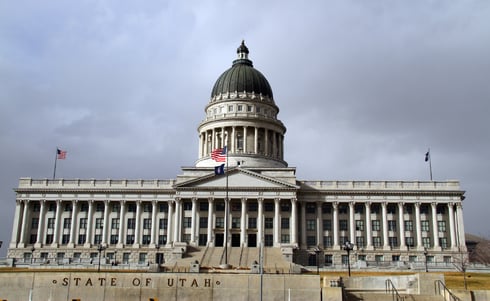
Surface Transportation Reauthorization: Latest Developments
With the current surface transportation law set to expire on September 30, 2026, Congress is moving deeper into work on the next multi-year reauthorization bill. House and Senate committees have been holding oversight hearings and stakeholder discussions as they prepare legislative text expected later this year. The House Transportation and Infrastructure Committee has identified reauthorization as a top priority for 2026, with a goal of advancing a bipartisan bill before the deadline. In the Senate, the Environment and Public Works Committee continues reviewing how the current law has performed and assessing potential updates to formula funding, project delivery, and program structure. Several key policy issues are shaping negotiations: Funding Levels and Formula Allocations – States and industry groups are advocating for stable, inflation-adjusted formula funding to preserve purchasing power and allow long-term planning. Project Delivery and Permitting Reform – Streamlining environmental reviews and improving interagency coordination remain central themes as lawmakers look for ways to reduce delays and cost uncertainty. Freight and Supply Chain Infrastructure – Freight corridors, logistics hubs, and port connectivity continue to be focal points, particularly as Congress evaluates economic competitiveness priorities. Federal-State Balance – Policymakers are debating how much flexibility states should have in deploying federal transportation dollars versus maintaining federal standards and oversight. The timeline remains tight. Committees are expected to continue hearings and stakeholder engagement through the spring, with draft legislation potentially emerging mid-to-late summer. If Congress does not complete reauthorization before September 30, short-term extensions could be necessary. For states, local governments, contractors, and infrastructure-dependent industries, early 2026 is a critical window. Funding levels, eligibility rules, and permitting reforms decided in this cycle will shape infrastructure planning and investment for the next five years or more.
February 27, 2026
by Samuel Flitton

International Trade
Are New Tariffs on Solid Legal Footing Under Section 122?
President Trump is imposing new tariffs effective on Tuesday, February 24, under Section 122 of the Trade Act of 1974 (“Section 122”). The Section 122 tariffs replace the tariffs imposed under the International Emergency Economic Powers Act (“IEEPA”), and that the Supreme Court on Friday found unlawful. Does a solid legal footing exist for the Section 122 tariffs? Given the amount of money at issue for U.S. businesses, it is not hard to imagine a new wave of litigation attacking Section 122, and again seeking refunds of Section 122 duties collected. Section 122 is a blank slate. President Trump is the first president to impose tariffs under Section 122, and indeed the first president to take any action under Section 122 according to the Congressional Research Service.[1] No court opinions thus exist that have examined executive action under Section 122. As discussed below, however, the court opinions relating to the IEEPA tariffs indicate that trade deficits are a valid basis for temporary tariffs under Section 122. Whether Section 122 will survive closer scrutiny is, ultimately, impossible to predict given the lack of any precedent or past practice as to Section 122’s scope. Basis for New Section 122 Tariffs. The new Section 122 tariffs and the prior IEEPA tariffs identified longstanding, persistent, and large trade deficits as justifying action. In particular, President Trump issued an executive order under IEEPA to address the longstanding U.S. trade deficit, and to authorize the global reciprocal tariffs.[2] Section 122 allows the imposition of tariffs “to deal with large and serious United States balance-of-payment deficits” or to “prevent an imminent and significant depreciation of the dollar in foreign exchange markets.”[3] In issuing his proclamation on Friday evening imposing Section 122 tariffs, President Trump cited the longstanding and persistent deficit as justifying the action. Thus, “[r]estricting imports through the surcharge imposed in this proclamation is required to address the fundamental international payments problems within the meaning of section 122 that I have found to exist.”[4] Section 122 Discussion in IEEPA Litigation. In the IEEPA litigation, the Court of International Trade (“CIT”) relied heavily on Section 122 to find that the IEEPA tariffs were unlawful. The CIT found that Section 122 “removes the President’s power to impose remedies in response to balance-of-payments deficits, and specifically trade deficits” from IEEPA’s scope of authority.[5] Section 122 is a “non-emergency statute with greater limitations”[6] compared to IEEPA. The CIT, accordingly, said that Section 122 effectively displaced any tariff authority that might be read into IEEPA, at least with respect to trade imbalances. “Trade deficits…can be directly impacted by mechanisms such as import quotas and tariffs, as authorized by Section 122.”[7] The U.S. Court of Appeals for the Federal Circuit (“CAFC”) affirmed the CIT judgment, and also used Section 122 as context for interpreting IEEPA. The CAFC majority opinions cited Section 122 for the proposition that Congress delineated tariff authority carefully, and subject to procedural and durational limits.[8] The majority opinions of the Supreme Court said nothing particular about Section 122, except to say that numerous U.S. trade statutes place limits on the duration, amount, and scope of tariffs.[9] While the Supreme Court majority opinions did not discuss Section 122 in depth, Justice Kavanaugh’s dissent did. He cited Section 122, along with other statutes, as providing “expansive” power to the President to impose tariffs.[10] Justice Kavanaugh also cited Section 122 to diminish the importance of the Supreme Court’s IEEPA decision: “with respect to tariffs in particular, the Court’s decision might not prevent Presidents from imposing most if not all of these same sorts of tariffs under other statutory authorities.”[11] Thus, from Justice Kavanaugh’s perspective, Section 122’s broad authority created an alternative to IEEPA that could be used to implement global tariffs. Whether Section 122 is Vulnerable to Lawsuit. All of the above is to say that IEEPA litigation suggests Section 122 is a basis to impose global tariffs to remedy trade deficits.[12] Not a lot more can be said than this, as of today. Any reviewing court of Section 122 tariffs would have to confront a dearth of authority on Section 122. There is no existing Section 122 practice, nor are there any cases directly reviewing executive action under Section 122. A reviewing court presumably would have to afford the President at least some discretion in determining the circumstances under which Section 122 is appropriately used. President Trump’s Section 122 proclamation cites to findings of the executive branch as to the scope, severity, and impact of trade deficits. It is unlikely that a reviewing court would meaningfully subject those findings to judicial review. President Trump’s Section 122 proclamation exempts certain goods from tariffs. A potential plaintiff might argue this framework does not provide a uniform “surcharge” in the words of Section 122. The Section 122 tariffs apply to goods from all countries,[13] including those for which the United States has a trade surplus. This might be argued to be a “surcharge” in excess of what is necessary. Section 122 does allow, but does not seem to require, the President to exempt countries from tariffs if they have large and persistent trade surpluses.[14] Conclusion. To conclude, the Section 122 tariffs are novel, as were the tariffs under IEEPA. However, unlike the IEEPA tariffs, a potential plaintiff will have to go deeper than saying the statute does not permit tariffs. Section 122 explicitly permits tariffs. The CIT, CAFC, and Supreme Court discussion of Section 122 in the IEEPA litigation suggest that Section 122 is an avenue for President Trump to impose global tariffs to address the U.S. trade deficit. Whether that authority is lawfully exercised remains to be seen. [1] See Congressional Research Services, Congressional and Presidential Authority to Impose Import Tariffs, at 16 (February 27, 2025), available at: https://www.congress.gov/crs_external_products/R/PDF/R48435/R48435.1.pdf [2] Executive Order No. 14257, Regulating Imports With a Reciprocal Tariff To Rectify Trade Practices That Contribute to Large and Persistent Annual United States Goods Trade Deficits, 90 Fed. Reg. 15,041, (April 2, 2025). [3] 19 U.S.C. § 2132(a). [4] Presidential Proclamation, Imposing a Temporary Import Surcharge to Address Fundamental International Payments Problems, (February 20, 2026), available at: https://www.whitehouse.gov/presidential-actions/2026/02/imposing-a-temporary-import-surcharge-to-address-fundamental-international-payments-problems/. [5] V.O.S. Selections v. United States, Slip Op 25-66, at 24 (May 29, 2025). [6] Id. at 34. [7] Id. at 35. [8] E.g. V.O.S. v. United States, Slip Op. in case 25-1812, at 27 (citing Section 122 among statutes “where Congress has affirmatively granted such [tariff] power and included clear limits on that power.”). [9] E.g. Learning Resources v. Trump, Slip Op. in 24-1287 (Roberts at Fn 4). [10] See Learning Resources v. Trump, Slip Op. in 24-1287 (Kavanaugh Dissenting at 7). [11] See Learning Resources v. Trump, Slip Op. in 24-1287 (Kavanaugh Dissenting at 62). [12] Section 122 does not actually use the term “trade deficit” with respect to a condition under which global tariffs are authorized. See 19 U.S.C. § 2132(a). Instead, it uses the term “balance of payments” deficit. The CIT reasoned that since trade deficits are one type of balance of payment deficit, that Section 122 would allow global tariffs to address a trade deficit. See V.O.S. v. United States, Slip Op. 25-66 at 34-35.
February 23, 2026
by Dave Townsend

Executive Orders
Where things Stand After a Monumental Day on Tariffs
February 20, 2026 started off with arguably the most economically significant Supreme Court ruling in living memory when the Court struck down the White House's use of IEEPA authority for tariffs representing roughly half of collected tariff revenue over the last year. The day ended with executive orders from an undeterred White House laying out a course for its continued tariffs strategy. What remains most uncertain is the question of refunds for IEEPA tariffs paid. The Administration's Pathway Forward Reuters reported a quote from Treasury Secretary Scott Bessent that summarizes the Administration's plans well enough: The Supreme Court has taken away the President's leverage, but in a way, they have made the leverage that he has more draconian because they agreed he does have the right to a full embargo. . . We will get back to the same tariff level for the countries. It will just be in a less direct and slightly more convoluted manner. Later in the day, in two different executive actions (here and here), the White House responded to the Supreme Court's decision by announcing specific actions: Immediate 10% tariff replacing in part the IEEPA tariffs: rescinding prior executive orders implementing the tariffs based on IEEPA but using Section 122 authority to enact a temporary 10% import duty for 150 days on most imported goods, with specific exemptions for items otherwise covered or in relation to certain trade partners. (Note: as we are writing this, President Trump reportedly announced that the 10% will immediately be increased to 15% on most goods.) Continuing the De Minimis Exemption. Although IEEPA authority had also been used to remove the de minimis exemption for low-value shipments, the suspension of de minimis continues under IEEPA. New 301 Investigations to Come. The Administration directs the United States Trade Representative to launch unspecified Section 301 investigations into unreasonable or discriminatory foreign trade practices that restrict American commerce. It appears that Section 122 tariffs will act as a bridge between today and when the 301 tariffs can be implemented. The timeline for the new 301 tariffs is unclear, but there is a 150-day limit on the Section 122 tariffs. This could, in short, create a temporary situation where the effective tariff rate dips for several months or even most of 2026 while the 301 tariffs are completed. We also expect new 232 duties and perhaps other (as-of-today) unknown duties that will be imposed to bridge the gap. Refunds Dorsey's client update on the Supreme Court's decision explains the (hopefully temporary) uncertainty regarding a pathway to refunds. The Court’s majority opinion vindicates the plaintiffs in these cases substantively, but there remains ambiguity whether U.S. Customs and Border Protection (“CBP”) will stop collecting the IEEPA tariffs before the U.S. Court of International Trade (“CIT”) reconsiders its grant of a nationwide injunction. It is also uncertain whether CBP will issue tariff refunds to importers who have not filed their own tariff lawsuits in the CIT to challenge these tariff actions. All eyes will turn to the lower court proceedings, the Trump Administration, and CBP to see how they interpret the scope and impact of the Court’s judgment. On the assumption that importers will ultimately be able to obtain refunds of IEEPA tariffs paid, we will be providing updated advice and strategies as things develop with the CIT and CBP. For some, the pathway may be more expensive and time consuming than makes sense to pursue. In the short term, companies should be gathering data and documentation regarding tariffs paid so that they are in a strong position to make a refund claim. Follow us for more law and policy updates.
February 21, 2026
by Troy M. Keller and Dave Townsend
Utah
Utah Legislature 2026 General Session – Week 5 Update
Welcome to Week 5 of the Utah Legislature’s 2026 General Session. With several of the bills of concern tabled for the remainder of the session, this week has felt a bit quieter than the preceding weeks. Too quiet... And too good to be true. On Thursday morning HB 587 – Income Tax Amendments (Rep. S. Eliason) was numbered and publicly released. Among other things, this bill includes the research and development (R&D) decoupling proposal that Utah’s House has been mulling over as a means of bolstering state revenue. In effect, HB 587 would eliminate the immediate deduction for R&D expenses for Utah tax purposes, requiring taxpayers to add back all R&D expenses deducted at the federal level and amortize the R&D costs over five years, rather than in the year they are incurred. This bill takes effect on May 6, 2026, and has retrospective operation for a taxable year beginning on or after January 1, 2026. Additionally, the bill would drop the state’s corporate franchise, income, and individual tax rates from 4.5% to 4.45%. The proposed decoupling has sparked serious concerns across key industries operating in the state. Businesses and industry leaders have expressed that this policy change is likely to significantly increase the cost of innovation for Utah businesses and negatively impact investment decisions moving forward. Troy Keller notes that “if Utah decouples from the federal fix, we will be one of the few places in the world where R&D is treated worse than a standard operating expense.” Regarding the proposal, BioUtah wrote: “research is the fuel of innovation and innovation is the engine for creating jobs. This policy will not only weaken research in Utah but seriously slow innovation while in the process penalizing members of the life sciences industry that have been such a strong contributor to the state economic engine. A tax policy that is punitive toward research-intensive companies cannot help but cause loss of jobs and discourage companies from considering Utah for research functions.” Additional background and insights on R&D expensing and the proposed decoupling from Troy Keller below. Background on R&D Deductions & Likely Impacts of Proposal The R&D Deduction is a standard business deduction—an operating expense essential to running a business. At the federal level, the One Big Beautiful Bill Act reinstated immediate expensing for domestic R&D costs under IRC § 174A, reversing the prior amortization requirement that applied for tax years after 2021, as enacted by the 2017 Tax Cuts and Jobs Act. Why are we talking about R&D expenses as separate from other types of expenses? It’s a historical quirk. In the 1950s, the IRS took a novel approach and tried to classify research wages as "capital improvements" (like building a factory) rather than operating expenses. This created massive litigation and uncertainty, discouraging businesses from hiring scientists. Congress intervened in 1954, passing Section 174 to clarify once and for all that R&D expenses should be deducted immediately, just like any other business cost. The Recent "Seesaw" For nearly 70 years, this commonsense approach prevailed. However, the 2017 Tax Cuts and Jobs Act, in order to get through reconciliation, made use of the fact that Section 174 created this category of expense and included a delayed revenue-raising provision that forced companies to amortize (spread out) R&D expenses over five years starting in 2022. This was never intended to actually happen—it was a budgetary gimmick designed to offset other tax cuts, and Congress fully intended to fix the gap and return its historic approach before they ever got to 2022. In fact, they chose this one because they were confident both sides would agree to fix it–but gridlock got in the way. Fortunately, Congress was able to reinstate immediate expensing in 2025 through the "One Big Beautiful Bill Act." The Trap for States. States generally follow the federal tax code for efficiency. But now, some states are considering "decoupling" from the federal fix to keep the amortization rule in place for R&D expenses. Why? Because it artificially inflates taxable income, generating a short-term revenue windfall for the state. But this is irrational and arbitrary. If more revenue is needed, there are better ways to go about it than punishing R&D. Why Amortization is Bad Policy for Utah. It’s very simple. We want businesses in Utah to invest in the future. Why would we penalize them for hiring scientists, software developers, and other investments in R&D activities? Engagement: with just two weeks left in the session, if your company is concerned with the likely impacts of this proposal, please reach out to us and we would be glad to connect you with your legislator. Bills We Are Watching HB 254 Construction Wage Standard Act (Rep. T. Clancy): This bill addresses wage standards for construction projects; directs the Labor Commission to determine the wages for the occupations a construction project requires for each county; establishes: a wage minimum that a contractor may pay a qualifying employee; a recordkeeping requirement; and the penalties for noncompliance; and makes technical and conforming changes. HB 294 Employer Verification Amendments (Rep. T. Auxier): This bill reduces the employer verification threshold from 150 to 100 and would require a private employer who employs 100 or more employees to register with a status verification system to verify the federal legal working status of any new employee after July 1, 2027.Note: the original version of this bill would have lowered the employer verification threshold from 150 to 50. The bill was recently amended to reflect the 100+ employer threshold. SB 298 Programmable Money Amendments (Sen. K. Stratton): This bill: excludes programmable money from the standard definition of money; prohibits a person from requiring the use of programmable money for a transaction unless the person also offers a free, non-digital alternative; outlaws an issuer denying a transaction based on discriminatory criteria, including a person's political opinions, religious beliefs, medical history, or lawful ownership of a firearm; prevents an issuer from using environmental, social, or governance standards and diversity programming compliance as a basis for failing or restricting a transaction; requires an issuer to provide a detailed written statement of the specific reason for a denied transaction or terminated service within 30 days of an affected party's request; establishes that violations are class A misdemeanors punishable by a fine of up to $10,000; grants an aggrieved party the right to seek punitive damages or the revocation of an issuer's business authorization; and does not prohibit the purchase or sale of cryptocurrency or other assets by public or private parties.Note: When presenting this bill in committee, the expressed goal of the legislation is to prevent citizens from being mandated to use programmable money in a way that would restrict their “basic sovereignty and financial freedom.” HB 571 Immigrant Amendments (Rep. T. Lee): Among other provisions, this bill would: [for a licensee under the Money Transmitter Act:] prohibit a licensee from initiating an international money transmission unless the licensee has verified that the sender is not an unauthorized alien; requires certain record keeping; and imposes penalties for a violation; require the Department of Financial Institutions to conduct random quarterly audits of licensees under the Money Transmitter Act to ensure compliance; prohibit a person from hiring or employing an unauthorized alien, and provide penalties for a violation, including fines and business license suspension or revocation; create a right of action against a person who hired, employed, or recruited an unauthorized alien and the actions of the unauthorized alien caused an injury or death; exempts an adult unauthorized alien from the definition of "employee" for purposes of the Workers' Compensation Act; requires an employer who knowingly hires or employs an unauthorized alien to be personally liable for all medical and treatment costs resulting from an injury sustained by the unauthorized alien during the unauthorized alien's employment, and imposes fines and other penalties.
February 20, 2026
by Cloe Nixon

Executive Orders
Beyond the Court: Congress and the Future of Emergency Tariffs
President Trump is imposing new tariffs effective on Tuesday, February 24, under Section 122 of the Trade Act of 1974 (“Section 122”). The Section 122 tariffs replace the tariffs imposed under the International Emergency Economic Powers Act (“IEEPA”), and that the Supreme Court on Friday found unlawful. Does a solid legal footing exist for the Section 122 tariffs? Given the amount of money at issue for U.S. businesses, it is not hard to imagine a new wave of litigation attacking Section 122, and again seeking refunds of Section 122 duties collected. Section 122 is a blank slate. President Trump is the first president to impose tariffs under Section 122, and indeed the first president to take any action under Section 122 according to the Congressional Research Service.[1] No court opinions thus exist that have examined executive action under Section 122. As discussed below, however, the court opinions relating to the IEEPA tariffs indicate that trade deficits are a valid basis for temporary tariffs under Section 122. Whether Section 122 will survive closer scrutiny is, ultimately, impossible to predict given the lack of any precedent or past practice as to Section 122’s scope. Basis for New Section 122 Tariffs. The new Section 122 tariffs and the prior IEEPA tariffs identified longstanding, persistent, and large trade deficits as justifying action. In particular, President Trump issued an executive order under IEEPA to address the longstanding U.S. trade deficit, and to authorize the global reciprocal tariffs.[2] Section 122 allows the imposition of tariffs “to deal with large and serious United States balance-of-payment deficits” or to “prevent an imminent and significant depreciation of the dollar in foreign exchange markets.”[3] In issuing his proclamation on Friday evening imposing Section 122 tariffs, President Trump cited the longstanding and persistent deficit as justifying the action. Thus, “[r]estricting imports through the surcharge imposed in this proclamation is required to address the fundamental international payments problems within the meaning of section 122 that I have found to exist.”[4] Section 122 Discussion in IEEPA Litigation. In the IEEPA litigation, the Court of International Trade (“CIT”) relied heavily on Section 122 to find that the IEEPA tariffs were unlawful. The CIT found that Section 122 “removes the President’s power to impose remedies in response to balance-of-payments deficits, and specifically trade deficits” from IEEPA’s scope of authority.[5] Section 122 is a “non-emergency statute with greater limitations”[6] compared to IEEPA. The CIT, accordingly, said that Section 122 effectively displaced any tariff authority that might be read into IEEPA, at least with respect to trade imbalances. “Trade deficits…can be directly impacted by mechanisms such as import quotas and tariffs, as authorized by Section 122.”[7] The U.S. Court of Appeals for the Federal Circuit (“CAFC”) affirmed the CIT judgment, and also used Section 122 as context for interpreting IEEPA. The CAFC majority opinions cited Section 122 for the proposition that Congress delineated tariff authority carefully, and subject to procedural and durational limits.[8] The majority opinions of the Supreme Court said nothing particularly about Section 122, except to say that numerous U.S. trade statutes place limits on the duration, amount, and scope of tariffs.[9] While the Supreme Court majority opinions did not reference Section 122 at all, Justice Kavanaugh’s dissent did. He cited Section 122, along with other statutes, as providing “expansive” power to the President to impose tariffs.[10] Justice Kavanaugh also cited Section 122 to diminish the importance of the Supreme Court’s IEEPA decision: “with respect to tariffs in particular, the Court’s decision might not prevent Presidents from imposing most if not all of these same sorts of tariffs under other statutory authorities.”[11] Thus, from Justice Kavanaugh’s perspective, Section 122’s broad authority created an alternative to IEEPA that could be used to implement global tariffs. Whether Section 122 is Vulnerable to Lawsuit. All of the above is to say that IEEPA litigation suggests Section 122 is a basis to impose global tariffs to remedy trade deficits.[12] Not a lot more can be said than this, as of today. Any reviewing court of Section 122 tariffs would have to confront a dearth of authority on Section 122. There is no existing Section 122 practice, nor are there any cases directly reviewing executive action under Section 122. A reviewing court presumably would have to afford the President at least some discretion in determining the circumstances under which Section 122 is appropriately used. President Trump’s Section 122 proclamation cites to findings of the executive branch as to the scope, severity, and impact of trade deficits. It is unlikely that a reviewing court would meaningfully subject those findings to judicial review. President Trump’s Section 122 proclamation exempts certain goods from tariffs. A potential plaintiff might argue this framework does not provide a uniform “surcharge” in the words of Section 122. The Section 122 tariffs apply to goods from all countries,[13] including those for which the United States has a trade surplus. This might be argued to be a “surcharge” in excess of what is necessary. Section 122 does allow, but does not seem to require, the President to exempt countries from tariffs if they have large and persistent trade surpluses.[14] Conclusion. To conclude, the Section 122 tariffs are novel, as were the tariffs under IEEPA. However, unlike the IEEPA tariffs, a potential plaintiff will have to go deeper than saying the statute does not permit tariffs. Section 122 explicitly permits tariffs. The CIT, CAFC, and Supreme Court discussion of Section 122 in the IEEPA litigation suggest that Section 122 is an avenue for President Trump to impose global tariffs to address the U.S. trade deficit. Whether that authority is lawfully exercised remains to be seen.
February 19, 2026
by Samuel Flitton

Week 4 Update - Utah Legislature 2026 General Session
Week 4 of the 2026 Utah General Session marks two important milestones: 1) the session is past the halfway point and policy trends are becoming clearer; and 2) the appropriations subcommittees have concluded their meetings and have shared their ranked priorities and appropriations proposals with the Executive Appropriations Committee (EAC). The EAC has the final say on who gets what and how much for State Agencies, incentives and credits, programs, initiatives, etc. for the remainder of Fiscal Year 2026, Fiscal Year 2027, and beyond in some cases. The halfway point of the session is significant for a number of reasons, but we find it often sheds light on which ideas have burnt out and been kicked down the road to interim, the priority proposals that will receive attention moving forward, and legislative trends become more defined. Update on Priority Legislation & Proposals As discussed in previous updates, there are a number of proposals of concern that we have been tracking closely and actively playing defense on, in coordination with industry associations. This week we learned that a number of proposals of concern are likely to be tabled for the remainder of the session. What is not moving forward signals a positive message: the legislature remains willing to listen and work as partners with the business community on key issues. Below we have highlighted updates on a few key proposals from this week. HB 203 (S1) – Noncompete Amendments (Rep. T. Clancy) – Update: the bill was pulled from the House 3rd Reading Calendar and returned to the Rules Committee for the remainder of the session. The Sponsor has signaled that he has heard the concerns of the business community and will engage over the interim (May – November) with industry members to draft a proposal that protects workers from overreach and overenforcement. HB 441 – Property Transaction Amendments (Rep. J. Koford) – Update: the sponsor has indicated that she will likely not be pursuing this proposal this session. HB 161 Property Tax Modifications – Update: the sponsor has shared that she will not be pursuing this bill this session and would like to engage with industry over the interim to determine a feasible approach to adjusting property taxes moving forward. R&D Decoupling – Update: we have heard that the analysis of the revenue the state might expect from decoupling the state R&D expensing from the federal R&D expensing may not be as significant as proponents of the proposal had initially believed, making it a less attractive option. We will continue to monitor these discussions. Legislative Trend: Regulating Online Commerce in the AI Age Among other emerging legislative trends this session, we are closely tracking several bills that aim to establish regulations in the fast-evolving online commerce landscape targeting consumer data, online pricing, and the use of AI. Below we have highlighted several of the bills in this issue area. Below we have highlighted several of the bills on this issue. HB 29 - Unfair and Deceptive Pricing Amendments (Rep. T. Clancy | Sen. E. Vickers) – This bill: defines terms; prohibits hidden fees by requiring the clear and conspicuous disclosure of the total price in an offer or an advertisement for a product; directs the Division of Consumer Protection to administer and enforce the chapter; and grants the Division of Consumer Protection the power to impose a fine and seek court relief. HB 438 – Artificial Intelligence Amendments (Rep. D Fiefia) – This bill enacts the Companion Chatbot Safety Act to regulate operators of companion chatbots and protect consumers. This bill: defines terms; requires operators of companion chatbots to comply with the Utah Consumer Privacy Act; establishes disclosure and data protection requirements for operators; establishes additional safety requirements for operators serving minor users; authorizes rulemaking for age assurance and safe harbor standards; requires annual reporting by operators to the Office of Artificial Intelligence Policy; grants enforcement authority to the Division of Consumer Protection; provides for administrative fines and civil penalties; establishes safe harbor provisions for operators; and provides a severability clause. SB 177 (S1) – Product Pricing Amendments (Sen. S. Pitcher | Rep. T. Clancy) – This bill enacts provisions relating to algorithmic pricing. This bill: defines terms; provides that a supplier shall display disclaimer language when a supplier sues algorithmic pricing to set or display the price of a good or service; provides that disclaimer language does not apply to a loyalty, rewards, or promotional program; provides that the Division of Consumer Protection shall enforce the provisions this bill enacts; and makes technical changes. SB 293 – Consumer Pricing Data Amendments (Sen. H. Balderree | Rep. T. Clancy) – This bill: This bill: defines terms; enacts Title 13, Chapter 82, Consumer Pricing Act; provides that the Division of Consumer Protection (division) shall administer and enforce Title 13, Chapter 82, Consumer Pricing Act; subject to certain exceptions, provides that a supplier may not use a consumer's data to set the price of a good or a service; provides that a supplier may use a consumer's data to operate a loyalty program or offer discounts to the customer; provides that if a supplier uses an automatic pricing system, the supplier shall retain the data the automatic pricing system uses to set prices for at least three years; provides the enforcement mechanisms the division may use; and makes technical changes. Other Bills We Are Watching SB 280 – Damages Amendments (Sen. R. Winterton) – This bill is viewed by some business and industry associations as a “responsible alternative” to SB 211 – Tort Amendments (Sen. K. Cullimore), that addresses medical damages without undermining transparency. SB 287 –Targeted Advertising Tax (Sen. M. McKell) – this bill creates a new statewide tax on targeted digital advertising delivered in Utah by large advertising platforms and establishes a dedicated revenue stream to fund specified youth and community programs. SB 254 – Critical Minerals Amendments (Sen. A. Millner | Rep. D. Shallenberger) – This bill: facilitates faster permitting by the Department of Environmental Quality and the Division of Oil, Gas, and Mining; provides for the diversion of new growth from the mineral severance tax; defines terms; establishes the state critical minerals objectives and policy, including providing for annual reviews; creates the Critical Minerals Council (council), including establishing the council's operations, powers, and duties; addresses areas of coordination by certain council members; establishes a process to designate critical mineral zones, including providing for property tax differential revenue; provides for the creation of a clearinghouse of data to be known as the "Critical Minerals Atlas"; addresses the creation of the Minerals for Industrial, National, and Economic Security Center; creates the Critical Minerals Development Account; and makes technical and conforming amendments. As always, we’d love to hear from you. Please reach out if you’d like to discuss any of the proposals we have highlighted or other bills that your company is tracking.
February 15, 2026
by Cloe Nixon

Executive Orders
A New Housing Policy Meme
"Memetics" was a theory launched by Richard Dawkins in the 1970s positing that cultural trends and ideas emerge from base components (he called memes) in much the same way that biological organisms do from genes. As the theory goes, compelling ideas survive while less effective ones drop away, with variations and combinations succeeding or failing in a survival of the fittest. Sadly, memetics found limited success as a theory of everything, though it did inspire internet meme terminology for what that is worth. Still, I find it a useful framework for narrower observations, such as when looking at the evolution of public policy ideas. Diffusion of policy initiatives can often be traced back to some basic component, or meme, that is applied with varying levels of complexity in different situations and by different policymakers. Think of the concept of a "sin tax," historically popular because it punishes undesired behavior and generates revenue at the same time. This basic policy meme has been the through-line for countless laws going back millennia (as far back as Egyptian Pharaohs taxing beer to help build the pyramids). Birth of a Housing Policy Meme In response to the very topical question of housing affordability, we are seeing a relatively new policy meme getting uptake. This is in short the proposal to restrict institutional ownership of homes. And over the last few years, it has been the center of several proposals at the state and federal level, including "The End Hedge Fund Control of American Homes Act" and "Stop Predator Investing Act." What counts as institutional ownership and what form the restriction takes varies, as would-be policymakers seek a winning formula, but the core concept seems to be gaining traction. The most recent iteration was a White House executive order on January 20, 2026 titled Stopping Wall Street from Competing with Main Street Homebuyers. There is much still to be rolled out, but the executive order does several things: Definition of Large Institutional Investors. It directs Treasury to create a formal definition for large institutional investors (LLIs) within 30 days. This definition will be the heart of the policy. Who gets picked up by it and who doesn't will shape the market. Note: This could be released any day. Agency Roll-out. The executive order then directs agencies (HUD, USDA, VA, FHFA) to stop approving, insuring, or securitizing single-family home sales to LIIs, cutting off their access to the federal financing "oxygen" that supports the housing market. Note: They are allowed to provide narrow exceptions, such as for build-to-rent properties. Antitrust Enforcement. The order also instructs the DOJ and FTC to prioritize enforcement against large rental portfolios for using strategies like "coordinated vacancy" and algorithmic pricing. A lot comes down to who is being restricted. If the LII definition is drafted broadly, it risks going too far and displacing or restricting needed market players. If drafted narrowly, its impact could be nominal. Prior legislative proposals have looked at size of institutions and/or numbers of units they hold as thresholds for applying restrictions and penalties. Expect Treasury's proposed definition to include both these factors. It could also include variables such as neighborhood density, where restrictions kick in depending on how many units an investor holds in a particular geography. However, it seems likely Treasury will look to cast a broad net, anticipating that the agencies will apply exceptions or situational accommodations when they roll out the financial restrictions. Future of the Policy Some commentators have argued the role of large institutional investors in the housing market is small, and so this policy will have little in the way of impact. The Economist magazine reports LIIs account for just 5% of home purchases in recent years, and currently have 1% of overall ownership. Regardless, the concept seems to resonate, meme-like. The executive order is just the latest in a number of proposals and initiatives in recent years. As such, it will be wise to pay attention to how things play out in coming months. Will the EO affect businesses that fix and flip homes? Could the policy ultimately expand to pick up smaller investors, like owners of short term rentals? Will it inadvertently affect financial institutions that support liquidity, such as those that offer rent to own financing approaches or those that serve as buyers of last resort in foreclosures? One argument goes that without massive capital pools to absorb mortgage debt, private lenders may demand higher yields to offset the increased risk of holding less liquid assets. Ultimately, whether this policy meme will gain traction, defeat legal challenges that are sure to arise, or even become codified through one of the Congressional proposals, are open questions. Its life as a policy meme could be short-lived as a result of administrative procedures act challenges (though the White House has spread the risk here by involving multiple agencies and a number of initiatives). Overall, there will be lots to watch over the next few months, and participants in the housing sector (both public and private) are advised to do what they can to be at the table in the evolving housing policy discussion. Follow us for more law and policy updates.
February 15, 2026
by Troy M. Keller

Energy
Energy Law: Month in Review
Dorsey's full Energy Law: Month in Review for January 2026 can be found here. Below we've posted some of the policy related highlights. DOE Revokes $1.8-billion Clean-Energy Loan Commitment to Arizona Public Service On January 29, 2026, the DOE confirmed that it cancelled a $1.8-billion clean-energy loan commitment it had made on January 7, 2025, to Arizona Public Service (“APS”). APS’s goal is to retire all coal-fired generation by 2031 and to supply 100% carbon-free electricity to customers by 2050. At the time DOE announced its loan commitment, it stated that the loan would help finance the utility’s “new or upgraded transmission projects, renewable power generation, and grid-integrated energy-storage systems.” According to the DOE, the loan cancellation followed “an exhaustive first-year review” of the Biden Administration’s loan commitments. Appropriations Bill Funds DOE’s Wind and Solar Programs Despite proposing zero funding to DOE’s wind and solar programs, Donald Trump signed an appropriations bill (“Appropriation”) providing $3.1 billion to the DOE’s Office of Energy Efficiency and Renewable Energy (“EERE”), including $320 million to wind and solar programs. The $3.1 billion is an overall decrease from the $3.46 billion it received in 2025. But the Appropriation increases EERE’s budget for solar projects from $41.9 million to $220 million and its wind projects from $29.8 million to $100 million. Illinois Sets 3-GW Energy-Storage Target and Requires Utilities to Develop Virtual Power Plants On January 8, 2026, Illinois Governor J.B. Pritzker signed into law the Clean and Reliable Grid Affordability Act, which aims to combat rising electricity costs through development of battery storage and virtual power plants, new planning processes, energy-efficient investments, residential solar, and other initiatives. The law directs Illinois utilities to install 3 GW of grid-scale energy storage by 2030 and to develop programs to pay customers to use resources like batteries, smart thermostats, and EV chargers. It also lifts a moratorium on large nuclear-reactors. The law will double the allowed size of community solar projects to 10 MW. It also extends clean-energy siting reforms to storage projects, allows the Illinois Commerce Commission to accelerate renewables projects before federal tax credits expire, establishes a solar bill of rights for consumers, and ties the state’s Renewable Portfolio Standard budget cap to inflation to avoid disruptions to clean-energy procurement.
February 14, 2026
by Law & Policy Notebook

Artificial Intelligence
Fintech's Fat Moment in Time
The legal world has always played fast and loose with the concept of time. Judges of course regularly rewrite history when rendering opinions about what a law means and then applying the consequences retroactively, sometimes unwinding acts that already occurred. (Many businesses are hopeful this very thing happens when SCOTUS delivers its opinion on IEEPA and tariffs.) Another example is the legal principle of ratification, which allows for post hoc authorization of actions in a corporate setting. So with the swipe of a pen we make the present reality become the past reality. And yes, we have a Latin phrase for it. Nunc pro tunc, or "now for then." But the legal world has nothing on the financial one. Eight hundred years ago the knights templar built possibly the world's first complex banking system, allowing travelers to spend wealth on one side of the continent that physically sat thousands of miles away. These transactions could take months or years to settle. With a little bit of paper and a lot of trust, time and space were imagined away. The modern banking system is not a whole lot different; it's just that settlements happens within days rather than months. But we are still playing with time and fudging the difference to make modern life work. Last week I attended the fintechXchange conference in Salt Lake City, and challenges associated with time, and fintech’s hopeful solutions, were a key theme. Crypto technology has for a while offered the potential to shrink to virtually nothing the space between transactions and settlement, as distributed ledgers are instantly updated, no need for an intermediary. A crippling obstacle has been the lack of a clear regulatory framework. Last year, the Genius Act was passed, providing a legal structure for stablecoins that could bring them into the mainstream, particularly useful when it comes to payments. There is plenty of spadework to be done before we see consumer take-up, but at least there’s a pathway. But tokenization and the broader crypto space still needs additional regulatory clarity before these tools can reach their potential. More on this later. I had a mentor who would use the expression “fat moment in time” when referring to the practice of closing a complex deal with a series of related transactions occurring in a particular order yet at the same time. If a "moment" is really a 1:1 transaction between time and space, it shouldn't physically for multiple, related and causal things to happen together. But we make it happen anyway in these projects, particularly when a deal needs to close at the end of a fiscal year, in that moment where a full fiscal year has passed but the next one has not yet started. We can do it because these steps, while reflecting real world consequences, are legal ones, and so assuming all the formalities are ready to go, and the money is sitting safely in escrow, we can deem it so. Right now, to build a fat moment like this takes teams of lawyers, bankers and accountants and weeks of planning. The promise of fintech, powered by the blockchain and AI, could enable complicated steps like these to take place in ordinary consumer transactions, opening up the possibility of bringing significant flexibility for consumers. For example, decentralized finance is are already offering ways for consumers to both invest and spend the same dollars by using assets as collateral for micro loans. If DeFi reaches its potential, imagine how consumers (with a little compute help from AI) could look at their phones and pay for their coffee using the most optimal financial choice in that moment, whether cash, earned wage access, third-party-credit, asset-backed micro-loans or even hedges, with the necessary transactional steps all happening on crypto ledgers in the right order, right then. The technology is on its way, but this future requires another dose of legal structure. Many are hopeful something like the Digital Asset Market Clarity Act will provide the framework that will enable fintechs to innovate in this direction. At the moment, a tussle in the financial industry over the ability for crypto providers to offer rewards that banks aren't in a position to do is likely to keep it from progressing in Congress. If resolved, maybe we will see the long promise of crypto realized. Follow us for more law and policy updates.
February 7, 2026
by Troy M. Keller

Utah
Week 3 Update - 2026 Utah General Session
800+ bills and counting… Week 3 of Utah’s 2026 General Session was full of noteworthy updates for businesses. We’ve highlighted a few of these updates below. Possible Utah R&D Tax Deduction -- Decoupling One issue we are paying particular attention to is the emerging proposal for Utah to decouple from the federal approach to expensing research and development (R&D) costs. At the federal level, H.R. 1 – the One Big Beautiful Bill Act, reinstated the ability for companies to immediately deduct (rather than amortize over time) costs associated with R&D expenses. There is no bill file available, but if the legislature pursues the proposal, it is expected to take the form of a provision to withdraw this tax benefit with respect to Utah taxes. The state corporate income tax rate is around 4.5%, and for a company that is heavy in developers or researchers, the impact can be significant (see the below AI generated comparison for a company with 100 developers). This is already considered the top issue of the session for several industries. We are likewise concerned with how the proposal is likely to impact businesses who utilize these incentives and the state’s business climate as a whole. If enacted, this proposal would arguably make Utah a less attractive place to do business relative to states that continue to allow for immediate expensing of R&D costs. We understand that the “why” behind this proposal is to bring additional funds online in a tough budget year. We have heard that the “back of the napkin” impact of decoupling the R&D credits would free up approximately $100 million for the legislature to allocate elsewhere. Example of Decoupling on a Software Company with 100 Developers Category Path A: Decoupled Path B: Conformed to Federal Gross Revenue $30,000,000 $30,000,000 Operating Expenses ($10,000,000) ($10,000,000) R&D (100 Devs @ $150k) ($1,500,000) (10% Amortized) ($15,000,000) (100% Expensed) Utah Taxable Income $18,500,000 $5,000,000 Utah State Tax (4.5%) $832,500 $225,000 "Decoupling" Penalty +$607,500 $0 We’d like to hear from you – please let us know if your company relies on these R&D credits and how the possible decoupling might impact R&D activities and timing. Property Tax Amendments Proposal As we mentioned in previous updates, H.B. 161 – Property Tax Modifications, and H.J.R. 7 – Proposal to Amend Utah Constitution – Property Tax Modifications, have been at the top of the list of concerns for the business community this session. At a high level, the business community expressed concern that the proposal (and accompanying constitutional amendment, if enacted) would have shifted a greater portion of the property tax burden from residential to commercial properties. Our friends at the Utah Chamber shared that they have been notified that both measures have been placed on hold while lawmakers explore other approaches to reducing the property tax burden for all property owners, residential and commercial alike. Bills We Are Watching (New) B. 441 – Property Transaction Amendments (Rep. J. Koford): This proposal came online this week and would require that, when certain real property changes hands, the seller or closing agent provide property details including the sales price to the county assessor within a specified period after closing. The bill also clarifies that sales price information shared with the State Tax Commission or county assessors is not a “private record” under GRAMA and authorizes disclosure under defined circumstances. For commercial property interests, these changes could affect reporting obligations and transparency around transaction data used in assessment and valuation processes. B. 203 (S1) – Noncompete Amendments (Rep. T. Clancy): as we have previously noted, this bill has been a key focus of the business community. This bill would prohibit employers from enforcing a non-compete agreement if the employee is: nonexempt, a full-time student engaging in an internship or other short-term employment, eighteen years or younger, their total earnings are less than $155,000 per year, or if the agreement would restrict an employee's ability to work more than 25 miles from a specific geographic location. It would: prohibit non-compete agreements for independent contractors; require that an employer intending to enforce a non-compete agreement to give advance notice and include the agreement with the offer of employment and imposes requirements, and outlines that the offer should include a garden leave clause; imposes at $10,000 fee for violating this section; specifies that an employee has a right of action against a person if a violation occurs.Updates: the First Substitute of the bill reflects some of the changes requested by the business community and passed out of the House Business and Labor Committee with a favorable recommendation. The bill is now on the House 3rd Reading Calendar, which is the final step in the House. Negotiations with the sponsor remain ongoing and industry groups, Dorsey, etc. remain actively engaged in lobbying for a more favorable bill. B. 190 (S2) – Childcare Business Tax Credit (Rep. Jason Thompson): this bill increases the amount of the nonrefundable corporate and individual income tax credits to 30% of the qualified childcare expenditures if they qualify as an eligible small business; repeals the requirement for an employer to have claimed the tax credit for construction expenditures in order to claim the tax credit for childcare expenditures.Updates: This week Senator Balderree was added as the Floor Sponsor and the House Revenue and Tax Committee adopted a Second Substitute of this bill and passed it out of committee with a favorable recommendation. B. 291 – Security and Land Restriction Amendments (Rep. Candice Pierucci): This bill would lower the percentage of ownership a restricted foreign entity may maintain in a separate entity before the separate entity is considered a restricted foreign entity from 51% to 25% ownership interest.Updates: this week an amendment to the bill was adopted and the bill subsequently passed out of the House unanimously with a vote of 64-0 (11 absent). The bill is waiting for introduction in the Senate, where Senator McKell will be the floor sponsor. B. 175 – Public Funds and Political Activities Amendments (Rep. T. Lee): This bill prohibits an entity from receiving a government contract or state grant if they: participate in a political campaign, devote more than an insubstantial part of the entity's activities to attempting to influence legislation, or if their primary objective can only be attained by legislative action or inaction. It would prohibit a current or prospective government contractor or grant recipient from making a contribution to a political entity or to another person for a political purpose.Updates: this bill remains in House Rules and has not yet been assigned to a standing committee. B. 286 (S1)– Artificial Intelligence Transparency Amendments (Rep. D. Fiefia): This bill Requires a large frontier developer to write, implement, comply with, and publish a public safety plan, and a child safety plan if they operate a covered chat bot with more than a million subscribers; establishes requirements for the public safety plans; requires the large frontier developer to publish any material modification to the plan; requires large frontiers to publish risk assessments for covered chatbots; prohibits a frontier developer from making a false or misleading statement or omission about covered risks; allows a frontier developer to redact proprietary information or information that is integral to public safety or national security, and must describe the justification of the redaction; enacts civil penalties of $1,000,000 to $3,000,000, dependent on previous violations; requires developers to report certain safety incidents to the Office of Artificial Intelligence Policy and gives a timeframe based on severity of incident; requires this office to provide annual assessments and legislative recommendations regarding regulation of certain artificial intelligence, such as covered chatbots; establishes remedies for employees who suffer adverse action for whistleblower activity; provides a severability clause.Updates: The First Substitute of this bill was passed out of the House standing committee with a favorable recommendation, Sen. M. McKell has been added as the Senate Floor Sponsor, and the bill was recently circled (held from consideration) on the House 3rd Reading Calendar. B. 179 – Wage Amendments (Sen. Nate Blouin): this bill would require that an employer include information relating to wages and other compensation in a job listing; increases the minimum wage in the state to $20 per hour; prohibits that the Labor Commission from establishing a minimum wage that is lower than $20 per hour; requires that the commission adjust the minimum wage for inflation at least once per year.Updates: This bill was “not considered” by the Senate Committee it was assigned to this week and is likely to not progress further. Please don't hesitate to reach out if you have any questions or would like to discuss.
February 7, 2026
by Cloe Nixon

Utah
2026 Utah General Session Week 2 Legislative Update
The second week of Utah’s 2026 General Session remained full of hustle and bustle as bill files now total over 700, appropriations subcommittees worked to pass base budget bills (the funding bills, which fund existing and ongoing appropriations for state programs and make up around 90% of the state budget), and industry groups continue to negotiate with legislators on priority issues. An emerging theme is the growing tension legislators face as they endeavor to balance the tight budget year with the need for bold investments to meet the needs of Utah’s meteoric growth and the desire to reduce the strain on Utah families by lowering the cost of living. Below we walk through a couple key issues from week two and highlight five bills we are watching going into week three. Non-Compete Agreements Legislation Advances This week Representative Tyler Clancy’s HB 203 – Noncompete Amendments has been a key focus of the business community. Rep. Clancy met with members of the Utah Chamber on Wednesday and committed to work with businesses and industry to make the proposal more palatable. Prior to the committee hearing for HB 203 on Friday, Rep. Clancy released a substitute draft of the bill, which reflects some of the feedback provided by the business community. Among other changes, the substitute addressed the following concerns: Removes the 25-mile geographic restriction prohibiting enforcement of a non-compete agreement that restricted an employee’s ability to work within 25 miles of a geographic location Removes the “for cause” requirement prohibiting employers from enforcing non-competes against an employee terminated “without cause” Removes the garden leave requirements for employers to include and explain a garden-leave clause in all non-compete agreements Removes provisions granting the Labor Commission enforcement authority We appreciate the sponsor’s good faith efforts to work with the business community. Despite the changes in the first substitute, the bill still has a number of concerning provisions, including the $155,000 salary threshold for enforceability, and the Utah Chamber (spearheading industry efforts) has requested that the bill be tabled and studied over the interim. Dorsey clients and other businesses continue to express valid concerns over the negative impact the proposal would have on businesses and workforce development. The bill passed out of committee with a favorable recommendation and will move to the House floor for additional consideration. Dorsey looks forward to continuing to work with the bill sponsors to address concerns moving forward. Tax Policies A couple proposals to reduce taxes advanced this week and conversations are taking shape regarding possible cuts to other funding areas and potential policy proposals to generate additional revenue for the state and offset a proposed .05% cut to state corporate and income tax rates. Recall that tax cut and general budget discussions are happening against the backdrop of the projected $300 million decrease in income tax revenue for fiscal year 2026 due to the federal tax cuts and expanded deductions enacted under H.R. 1 – the One Big Beautiful Bill Act. This has created some debate as to whether the benefits of reducing the state's corporate and income tax rates from 4.5% to 4.45% are worth the cost. Opponents of the tax cut assert that funds could be better used elsewhere in a flat budget year. Whereas proponents applaud the legislature for its fiscally responsible, incremental approach to cutting taxes since 2021, which has resulted in around $300-600 in annual savings for the average Utah family. Below are three proposals we will continue to watch. B. 60 Income Tax Rate Amendments – the proposal would reduce corporate and income tax rates from 4.5% to 4.45% and is projected to save an average of $45/year for an average Utah family. This bill passed out of committee on Wednesday and will move to the Senate floor for consideration. B. 116 Income Tax Rate Modifications – among other provisions, this proposal would allow for an automatic income tax reduction when the actual state revenue exceeds the forecast revenue. This bill likewise passed out of committee, though by more narrow margins, and will move to the Senate floor for further consideration. B. 161 Property Tax Modifications – this proposal would create a referendum asking voters whether to amend the state's constitution to increase the residential property tax exemption from 45% of its value to 60%, which would take effect in January of 2027, if the referendum H.J.R. 7, receives support from a majority of voters when put on the ballot in November of 2026. The implication of this policy is that it would shift a greater portion of the property tax burden from residential to commercial properties. It is likely that the plan for tax cuts will not be finalized until the February state revenue projections are released. Governor Cox has signaled that his support for a tax cut will be contingent on the budget forecast showing that “there’s room to do it.” Five Bills we are Watching B. 211 - Tort Amendments (Sen. Kirk Cullimore): This bill would: Limit what juries can hear about insurance and paid medical bills. In most tort lawsuits, juries would no longer see evidence that a plaintiff’s medical bills were paid, discounted or written off by insurance or public programs. Damages would be considered without reference to those collateral payments. Prevent settlement decisions based on discounted medical costs. Defendants, including insurers, could not reduce settlement offers based on the lower amounts actually paid for medical care. This may lead to higher claim valuations in negotiations and at trial. Increase potential liability exposure and insurance costs. By limiting the use of collateral source evidence and restricting settlement leverage, the bill could increase damage awards and claim payouts. Insurers may respond by adjusting underwriting or raising premiums, which could ultimately increase insurance costs for Utah businesses. B. 179 – Wage Amendments (Sen. Nate Blouin): this bill would require that an employer include information relating to wages and other compensation in a job listing; increases the minimum wage in the state to $20 per hour; prohibits that the Labor Commission from establishing a minimum wage that is lower than $20 per hour; requires that the commission adjust the minimum wage for inflation at least once per year. B. 190 – Childcare Business Tax Credit (Rep. Jason Thompson): this bill increases the amount of the nonrefundable corporate and individual income tax credits to 30% of the qualified child care expenditures if they qualify as an eligible small business; repeals the requirement for an employer to have claimed the tax credit for construction expenditures in order to claim the tax credit for child care expenditures. B. 291 – Security and Land Restriction Amendments (Rep. Candice Pierucci): This bill would lower the percentage of ownership a restricted foreign entity may maintain in a separate entity before the separate entity is considered a restricted foreign entity from 51% to 25% ownership interest. B. 436 - Moderate Income Housing Infrastructure Amendments (Rep. Stephanie Gricius): This bill would require priority consideration by the Transportation Commission for certain transportation projects in communities with an annual housing development growth rate greater than 2.5%. Which, in effect, would further prioritize communities that are experiencing higher growth rates for investments in transportation, and ultimately allow for additional multimodal transportation options for employees living in high-growth communities.
January 31, 2026
by Cloe Nixon

Artificial Intelligence
The Unexpected AI Regulators
The axiom that legislators legislate and regulators regulate is typically applied to centers of government, like Washington D.C. or Brussels, where there can be a default instinct to create guardrails and restrictions whenever a new societal challenge is identified. But in a perceived accountability vacuum around artificial intelligence, states are seriously considering policies to get ahead of potential risks. California, Texas and New York have already passed legislation that would provide regulatory frameworks applicable to large AI developers. Now, legislators in Utah are swiftly progressing a bill that would provide a comparable level of oversight. H.B. 286 Artificial Intelligence Transparency Amendments Stepping carefully in light of White House directives for states not to impede AI progress and Utah's own pro-business reputation, the sponsors of H.B. 286 (Representative Doug Fiefia and Senator Mike McKell) are proposing a framework intended to mitigate child safety and large-scale, catastrophic risks through registration and reporting requirements. Specifically, the bill creates a new AI Transparency Act, which would apply to a category of "large frontier developers,” defined as AI companies that have foundation level computational power of 10²⁶ FLOPs (a threshold used in other contexts that captures the largest AI companies) and over $500 million in revenues. For companies falling into this category, the bill has the following key features: Mandatory Safety & Child Protection Plans: Developers must write, implement, and host public safety plans (to address catastrophic risks like cyberattacks or chemical weapons assistance) and child protection plans (detailing how they mitigate harms to minors and incorporate national safety standards). Risk Assessment & Incident Reporting: Companies are required to publish summaries of their internal risk assessments and must report "critical safety incidents"—such as the unauthorized release of model weights or AI-driven bodily harm—to Utah's new Office of Artificial Intelligence Policy. Whistleblower Protections: The bill establishes legal safeguards for employees of AI companies who report safety concerns or violations, prohibiting retaliatory "adverse actions" by the developer. Truth in Safety Labeling: It explicitly prohibits developers from making "materially false or misleading statements" regarding their safety plans or the risks posed by their models, allowing for civil penalties if a company claims to have safety measures that don't actually exist. Enforcement Mechanisms: Violations are subject to civil penalties, and the bill creates an enforcement fund to ensure the state has the resources to oversee these large entities. Disclosure Framework It's worth emphasizing that the bill would only regulate the largest of AI companies (i.e., not start-ups or companies in other spaces building out AI applications). And even at that level, it doesn’t restrict development but rather requires a level of “check in” and reporting with the state. Presumably, much would need to be worked out over time through rulemaking by the Office of AI Policy to provide specifics regarding the details of both what an adequate safety plan would entail and what results should they report to the state their model’s ability to cause harm. How the Bill fits into Utah’s Approach to AI In December, Utah held an AI summit, hosted by Governor Cox. State leaders were vocal about their desire to get ahead of emerging technologies that pose threats to mental health and to minors. As an alternative, they proposed a Pro Human AI initiative that would incentivize development that promotes human flourishing while being watchful. Last year, the State implemented an AI sandbox which has already authorized novel applications like an AI tool empowered to issue prescriptions for chronic illnesses. H.B. 286 would fit into the protective side of the equation. Follow us for more law and policy updates.
January 31, 2026
by Troy M. Keller