
Author: Troy Keller

Troy is a Partner in Dorsey's Salt Lake City Office. Troy has nearly three decades of experience in corporate governance, securities, capital markets, M&A, joint ventures, and government and legislative affairs. Having worked both as external and internal legal counsel for a number of Fortune 500 companies, Troy brings the expertise and insights companies need to navigate today’s challenges and opportunities.

Using AI to Analyze 600+ Tariff Comment Letters

Like many, I’ve found myself experimenting with AI to see if it would enable me to take on projects that are otherwise out of reach. I’ve had success in some narrow cases, but other times I’ve ended up in a rabbit hole to nowhere. My most recent project has landed somewhere in the middle. When USTR opened two Section 301...

Making IPOs Great Again

Securities & Exchange Commission (SEC) Chair Paul Atkins has been vocal about his desire to make IPOs great again. It would take a serious amount of rulemaking and potentially even statutory changes to reshuffle the mix of incentives and burdens that have inclined companies against going public in recent years. But if he is successful, even in part, there could...

The Season of the Sandbox

The concept of a regulatory sandbox is becoming a familiar one. When a recent White House executive order laid out a comprehensive legislative framework for artificial intelligence, it included a call for Congress to establish federal regulatory sandboxes, without any further explanation. Just a few years ago, such a request might have been met with a confused stare. Now, the...

More Quantum Policy

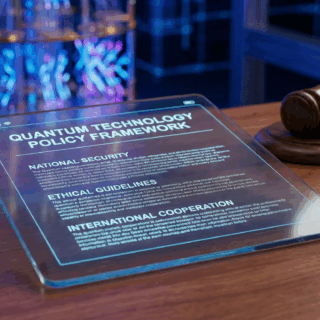
This article was written in collaboration with Dolly Chitta Ph.D. Dolly is founder of Curie Quantum and is Science and Innovation Advisor to the Nucleus Institute. In January, we made our first post on Quantum related policy. In a relatively short article, we summarized the totality of U.S. policy relating to Quantum initiatives and support over the last several years....

Massive New Section 301 Investigations Present Opportunity for Comment

In the wake of the Supreme Court’s February 20 decision striking down the authority of the United States Trade Representative to impose tariffs under IEEPA, USTR has been exploring other tariff authorities, including an immediate use of Section 122. It is now turning to its more traditional, investigative authorities, though to an unprecedented degree. On March 11, 2026 and then...

DOJ Announces Voluntary Self-Disclosure Policy

My colleagues have released an excellent update on the DOJ’s recently announced corporate enforcement and voluntary self-disclosure policy.  For a long time, the Department of Justice has encouraged self-disclosure, at times suggesting companies will be treated better if they do, but no guarantees. For the first time, they’ve formalized a policy, and companies should take note and be ready to seriously...

DOL Rulemaking has Broad Implications for the Gig Economy

On February 26, 2026, the Department of Labor (DOL) announced a Notice of Proposed Rulemaking regarding worker classification. It may feel like another policy swing from administration to administration. However, this proposal is the latest development in long-running debate with consequences for the gig economy and the employer-worker relationship. It is a debate that could be existential for some businesses....

Where things Stand After a Monumental Day on Tariffs

February 20, 2026 started off with arguably the most economically significant Supreme Court ruling in living memory when the Court struck down the White House’s use of IEEPA authority for tariffs representing roughly half of collected tariff revenue over the last year. The day ended with executive orders from an undeterred White House laying out a course for its continued...

A New Housing Policy Meme

“Memetics” was a theory launched by Richard Dawkins in the 1970s positing that cultural trends and ideas emerge from base components (he called memes) in much the same way that biological organisms do from genes. As the theory goes, compelling ideas survive while less effective ones drop away, with variations and combinations succeeding or failing in a survival of the...

Fintech’s Fat Moment in Time

The legal world has always played fast and loose with the concept of time. Judges of course regularly rewrite history when rendering opinions about what a law means and then applying the consequences retroactively, sometimes unwinding acts that already occurred. (Many businesses are hopeful this very thing happens when SCOTUS delivers its opinion on IEEPA and tariffs.) Another example is...